✦ New
Fall 2024 • Design Principles 1
Sculpie ▲ ◉ ⁑ ▨ ❋
a new approach to art therapy
My Role
Product Designer
Researcher
Tools Used
Fusion 360 + Bamboo 3D Printer Adobe Illustrator + Laser Cutter
▲ Overview
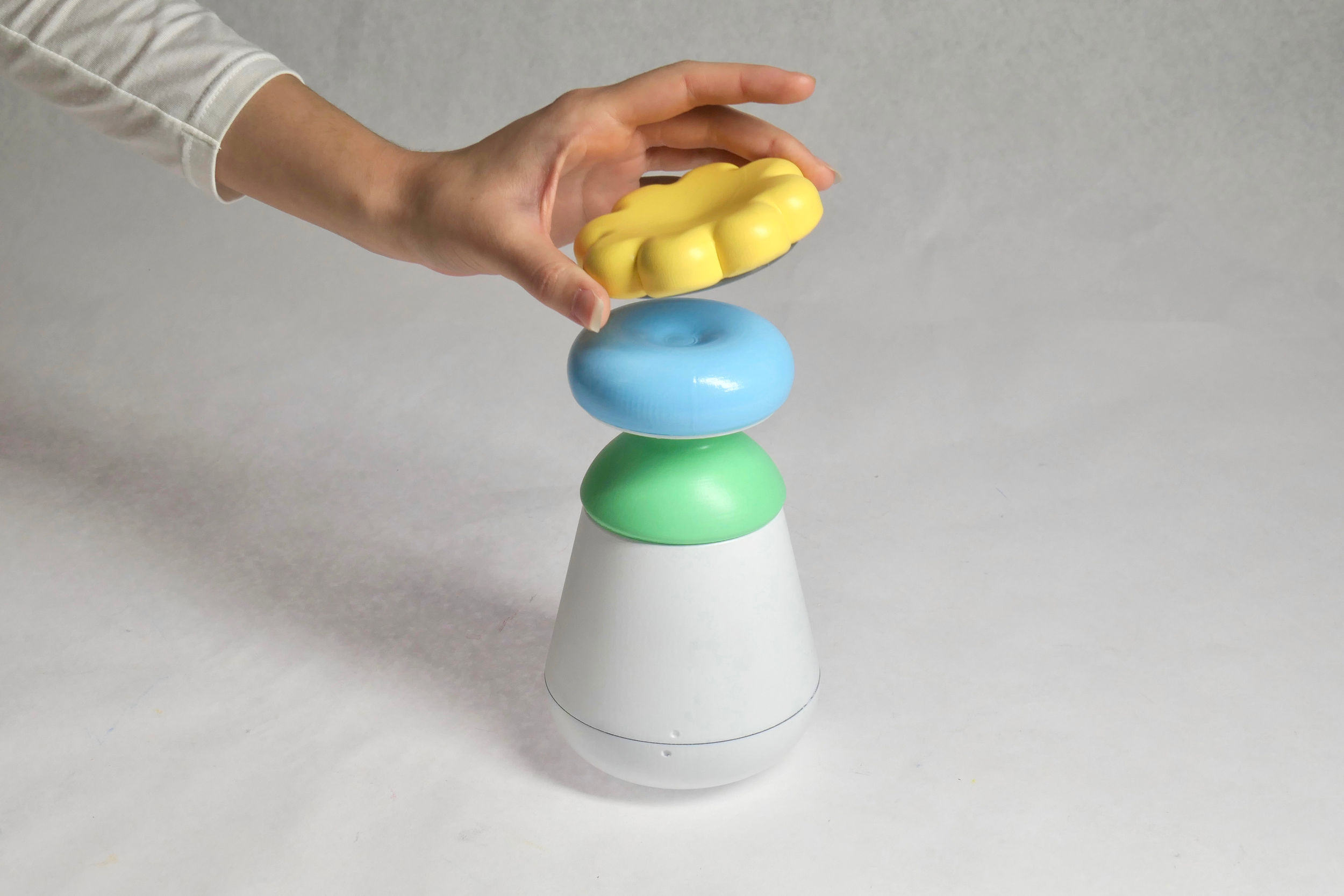
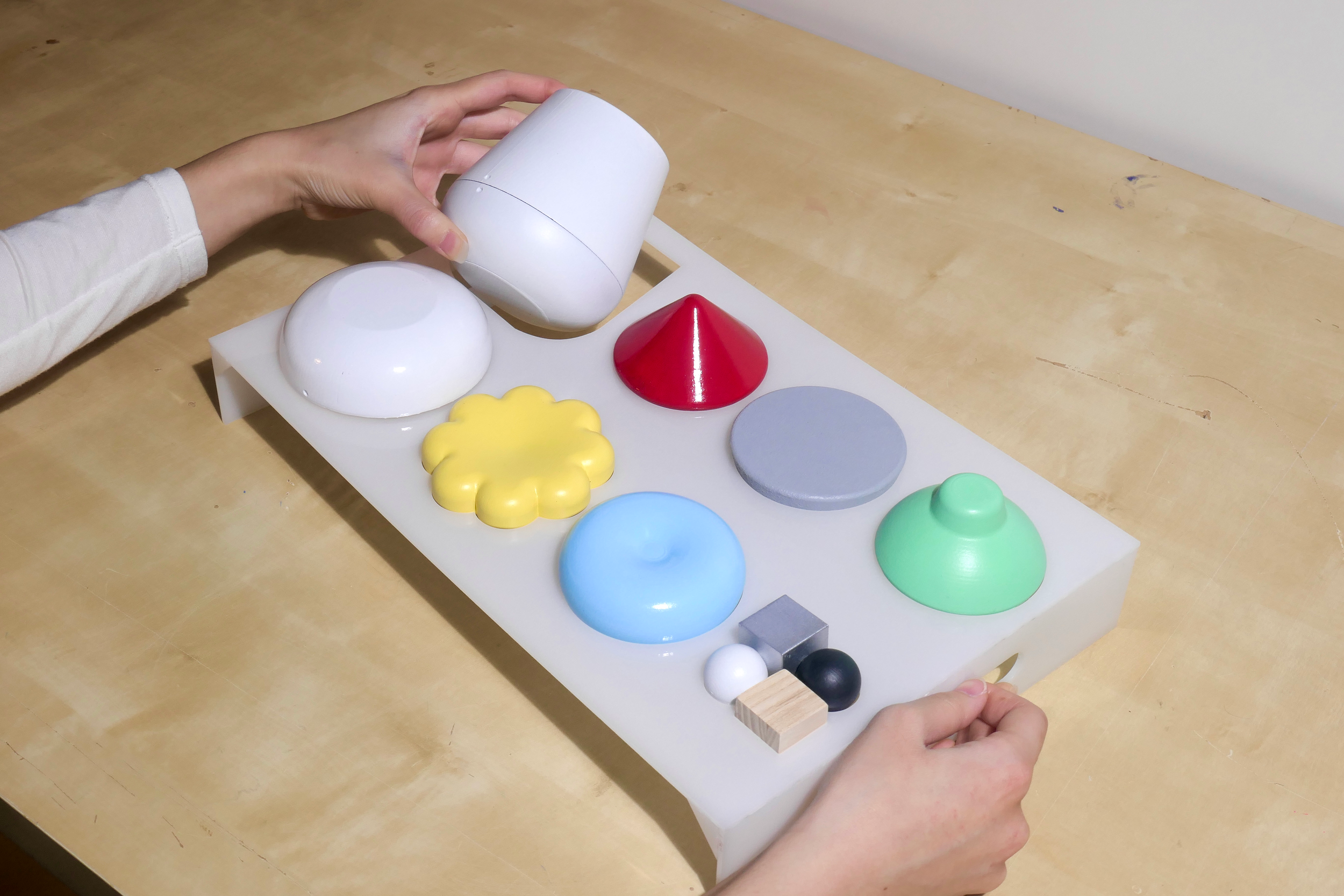
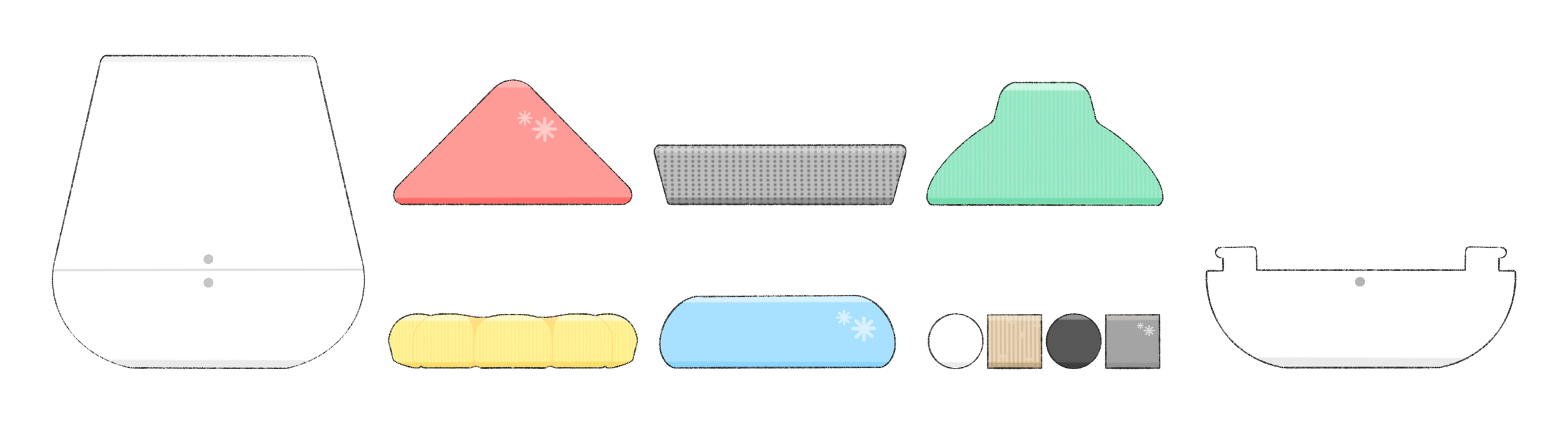
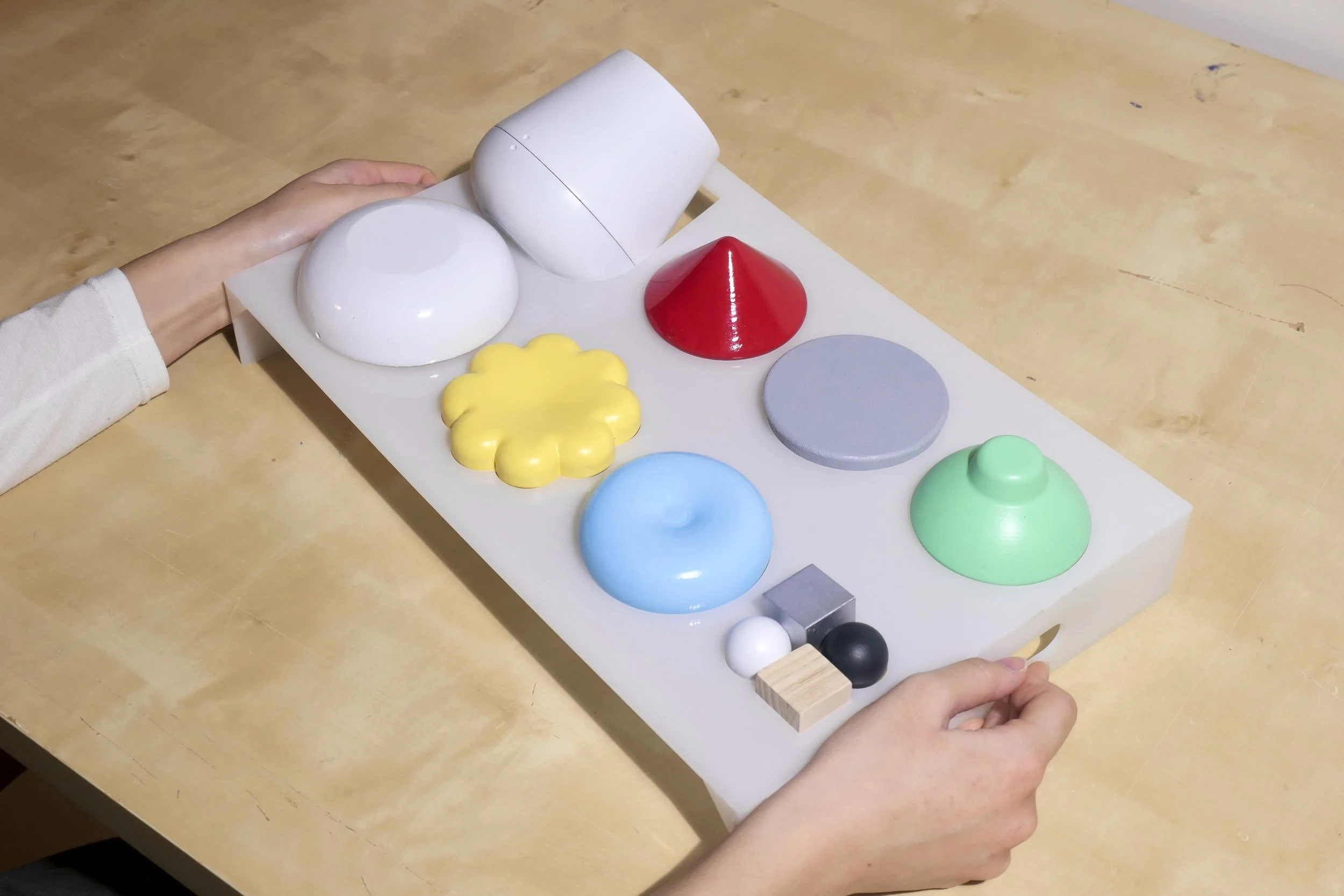
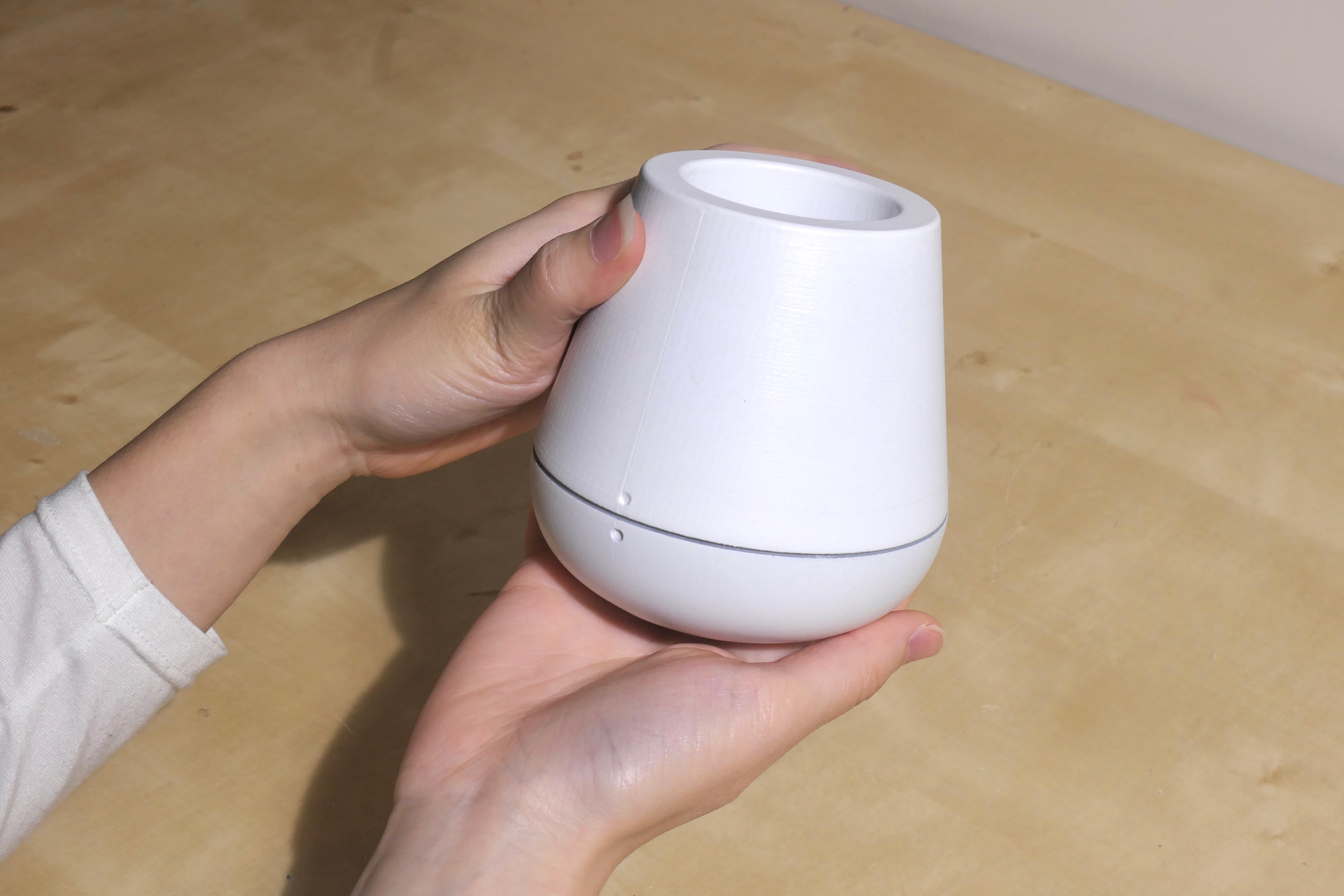
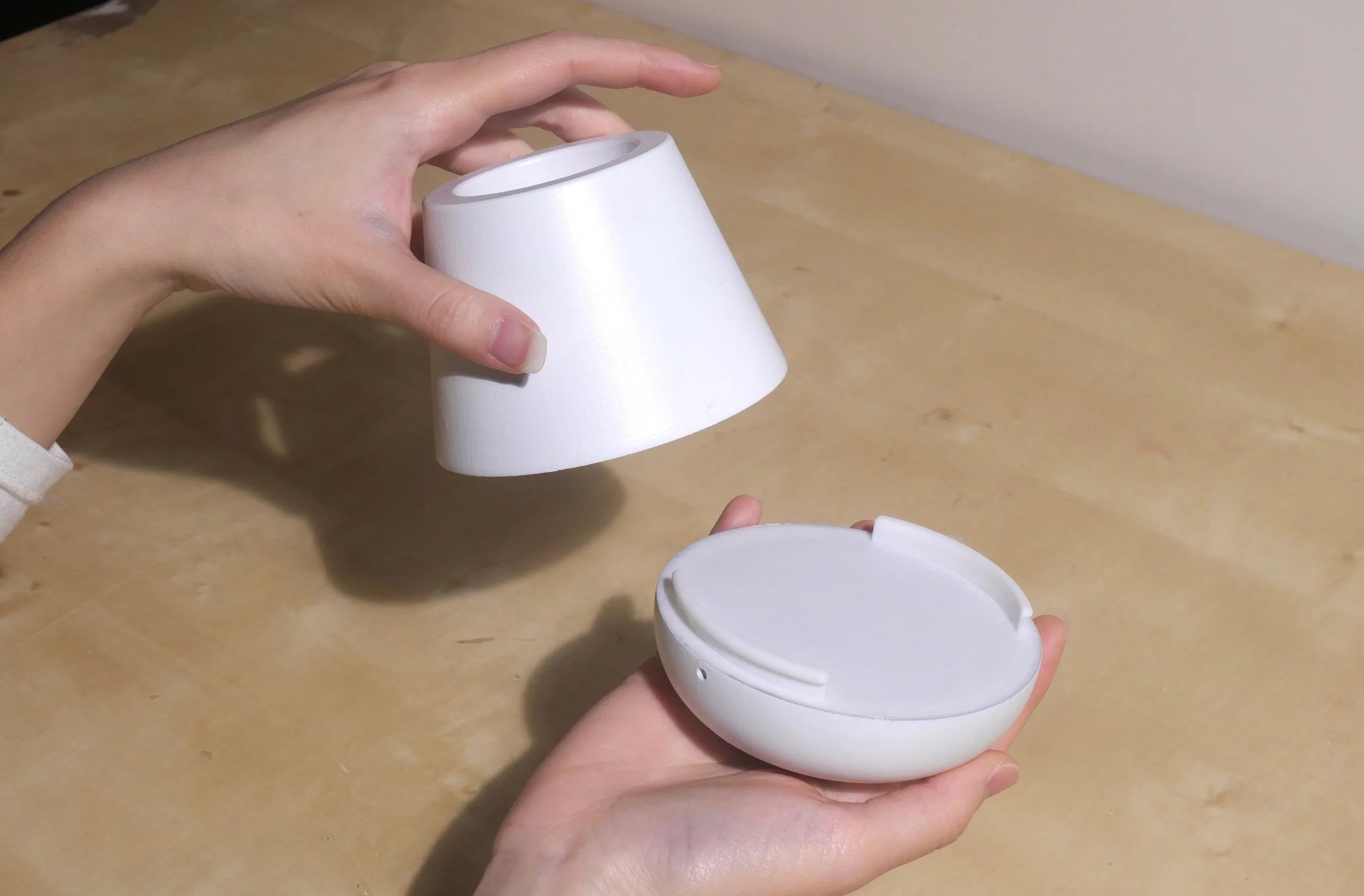
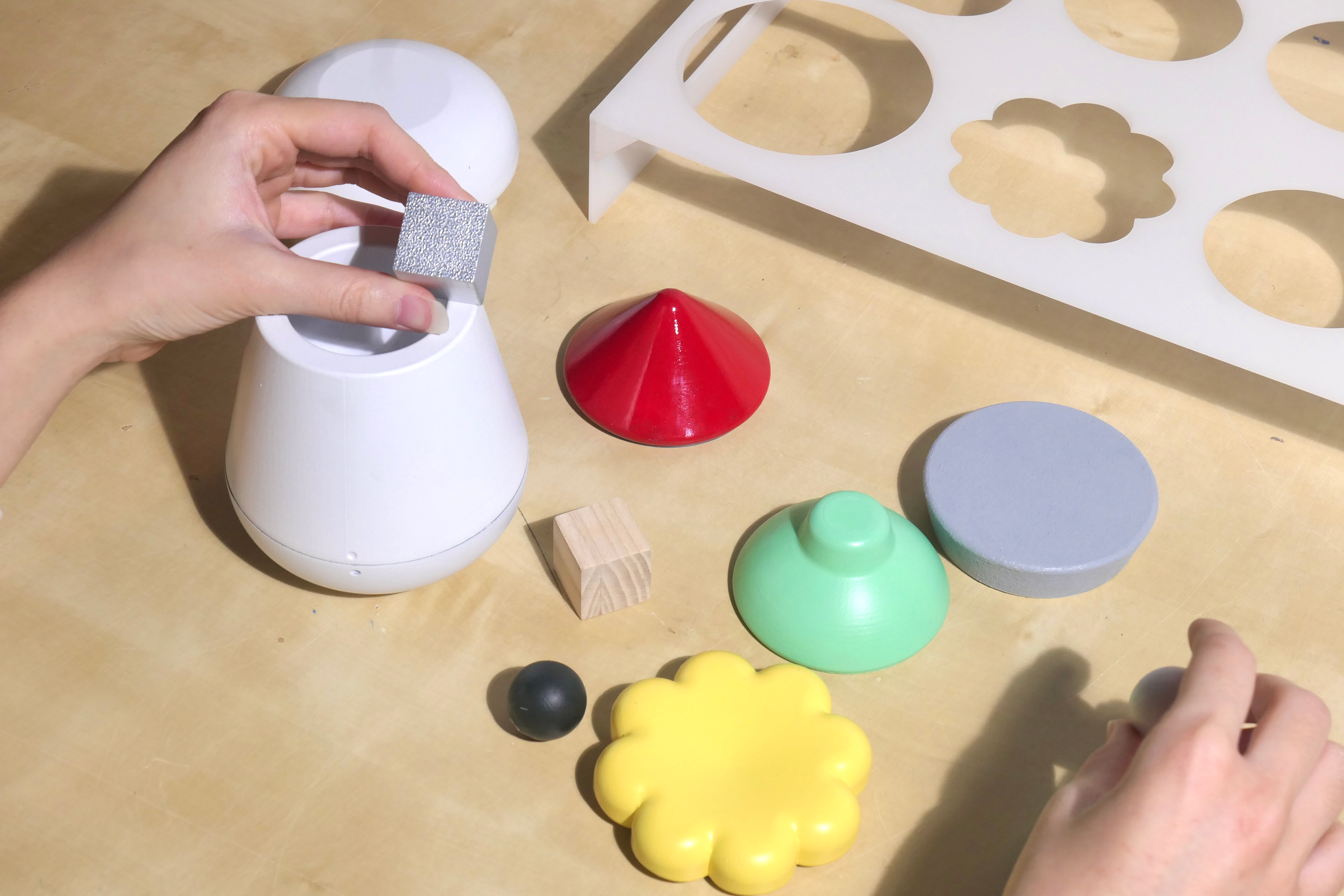
Presented is a toolkit intended for use within a clinical art therapy setting. The kit includes various symbols, each with a unique color, weight, and texture to help art therapy clients sculpt complex emotions.
All components are held together by embedded magnets within each element, providing a satisfying and grounding tactile experience.
Take a look inside the Sculpie tool kit…
◉ Why Art Therapy?
At the start of this project, I “brain-dumped” my thoughts onto a MIRO board. I wrote everything I was interested in creating, topics that intrigued me, problems I wished to solve, and more.
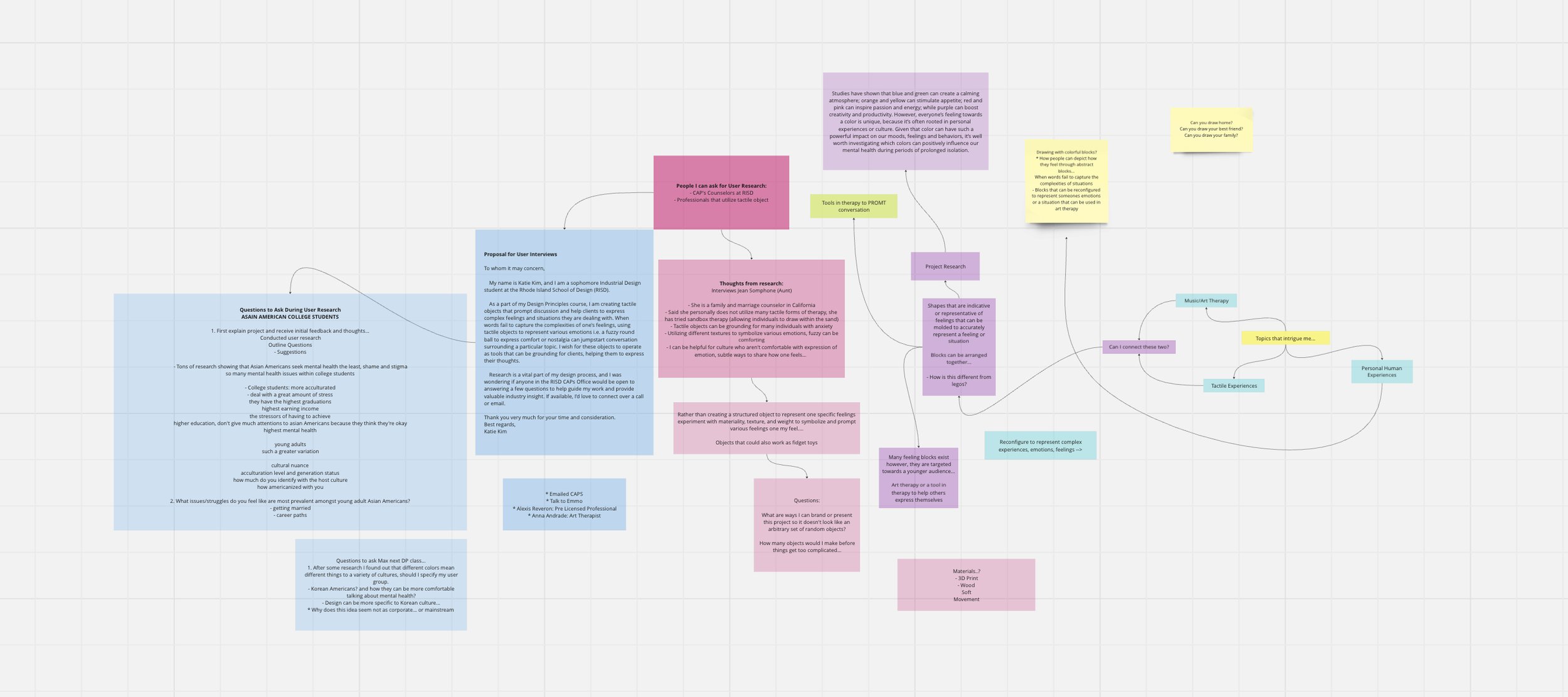
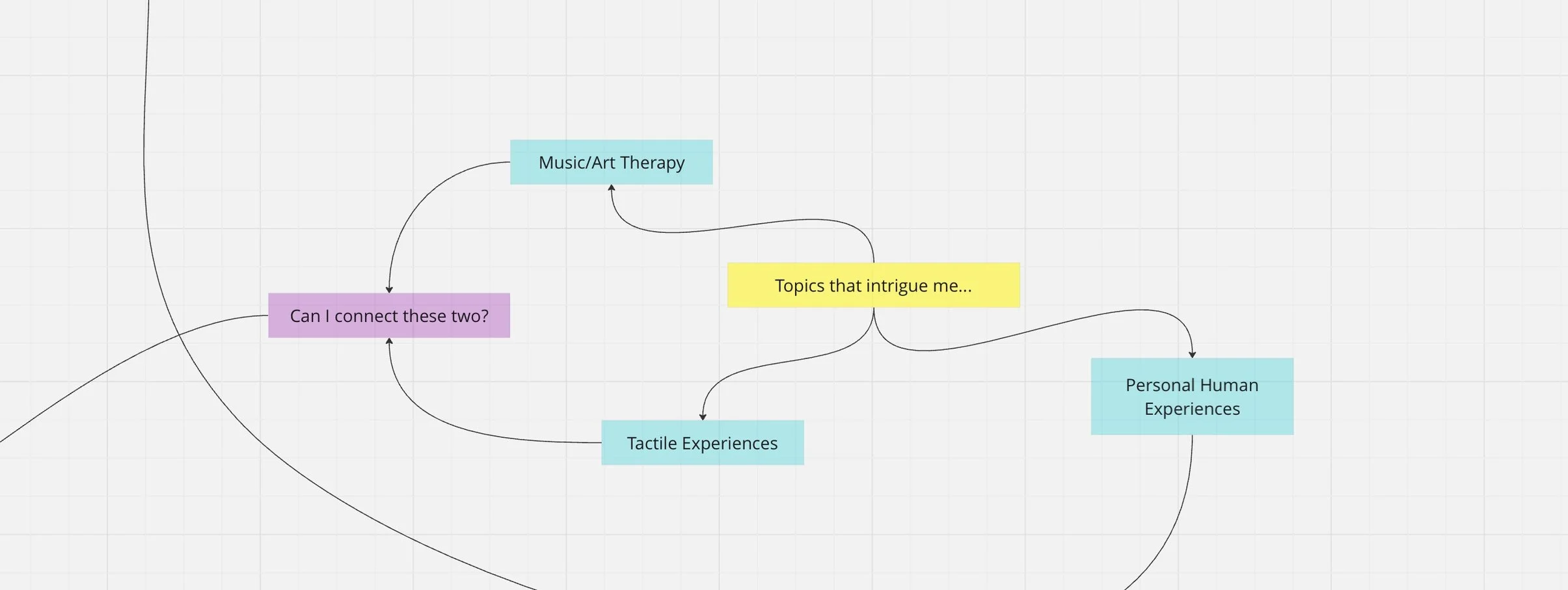
Art therapy sat at the intersection of everything my brain dump had told me. It was a field where I could create tactile products that could help people on a deeply personal level. I really enjoyed how at its core art therapy was an indirect, relaxing, safe, and personal form of communication.
⁑ User Research
What are some drawbacks of art therapy?
“As an adult I fear that art therapy may be too ‘childish’ and ‘juvenile’ for my age group.”
◉ Too “Childish”
Many adults feel like drawing/painting are juvenile, and do not see art therapy as a legitimate form of therapy.
“Sand-therapy can be really messy especially when working with wet-sand. The whole process is really drawn out.”
◉ Messy + Time Consuming
Art therapy often requires supplies that can make a mess and requires a tot of time for set up.
“I felt hesitant to start art therapy because I didn’t think I had the artistic ability to do it…art supplies can be overwhelming.”
◉ Overwhelming Skill Barrier
Many adults feel overwhelmed when presented with an artistic task and feel as if it is unapproachable.
What do you find effective about art therapy?
“As an adult I fear that art therapy may be too ‘childish’ and ‘juvenile’ for my age group.”
◉ Nonverbal Communication
Art therapy integrates forms of nonverbal communication that make clients feel safe when emoting.
“Sand-therapy can be really messy especially when working with wet-sand. The whole process is long and drawn out.”
◉ Sparks Memories + Nostalgic
Art therapy client's often feel very relaxed while creating art, brining them back to a state of play and whimsy.
“I felt hesitant to start art therapy because I didn’t think I had the artistic ability to do it…art supplies can be overwhelming.”
◉ Personal + Safe
Creating art is a very personal act. You are able to prescribe the meaning to the work you create.
How might we make art therapy more approachable for adults and accessible for motor compromised individuals?
▲ ◉ ⁑ ▨ ❋
Let’s talk to some users…
I was able to conduct a survey with 40 individuals with ages ranging from 10-65 years old.
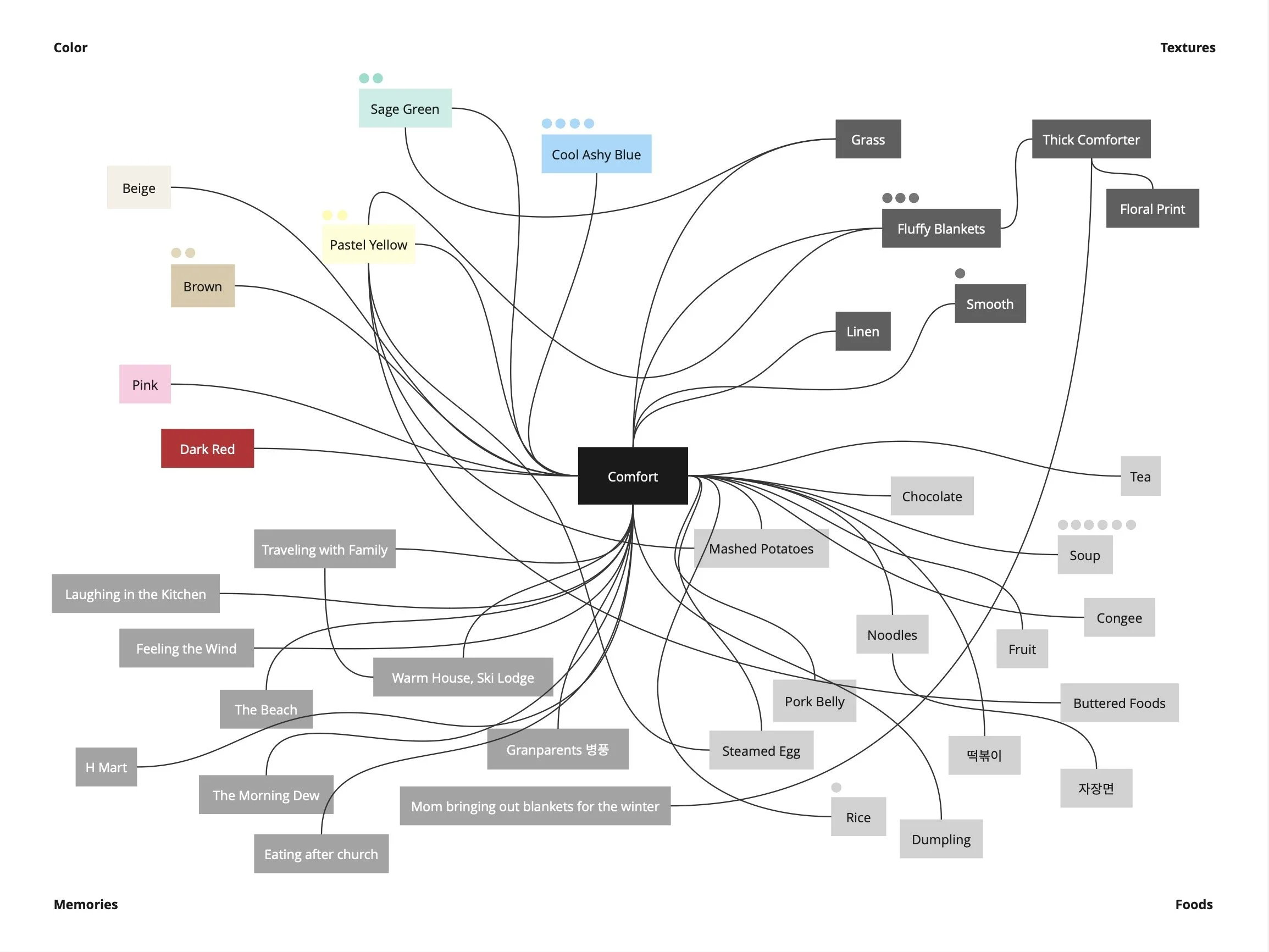
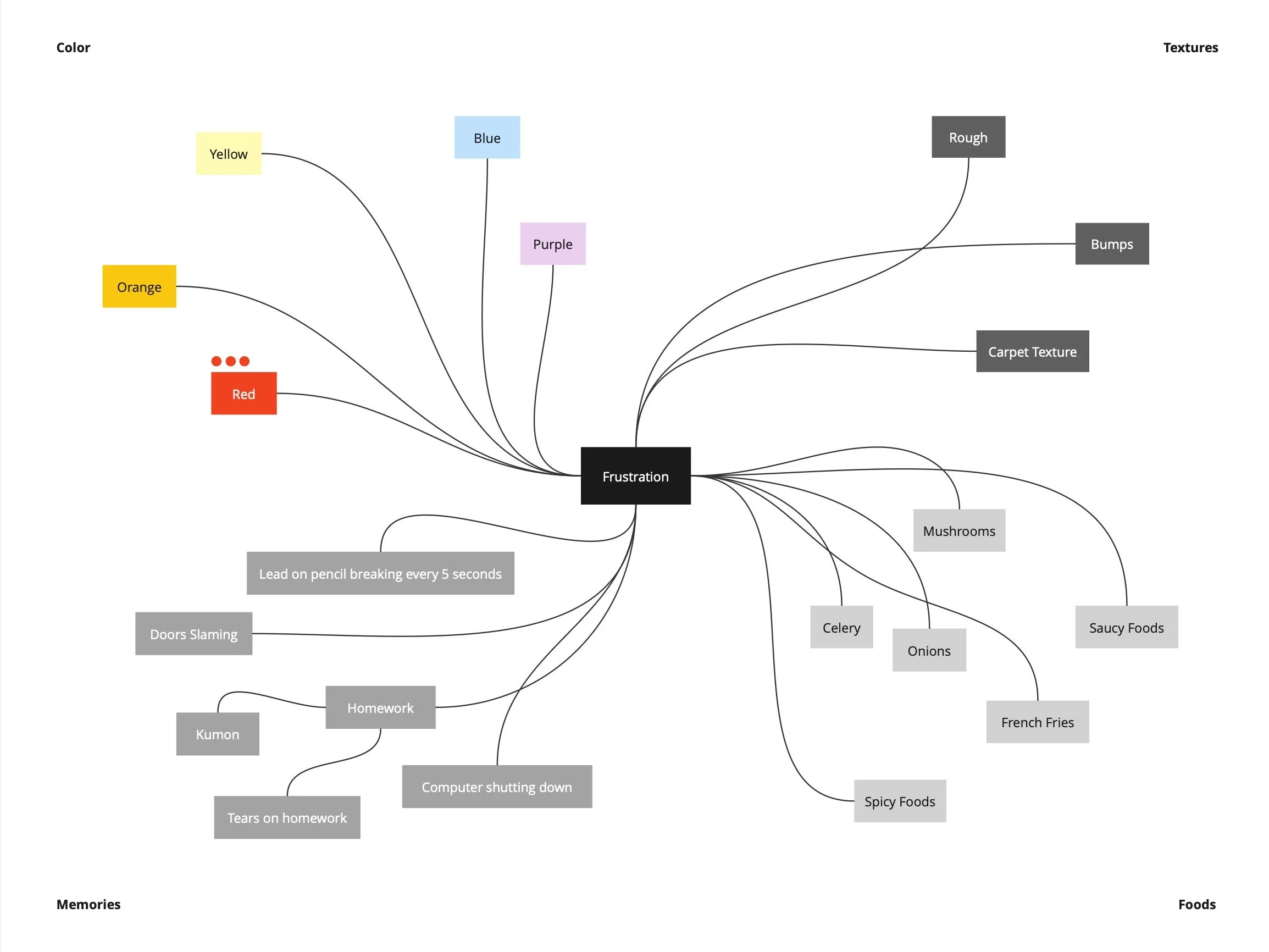
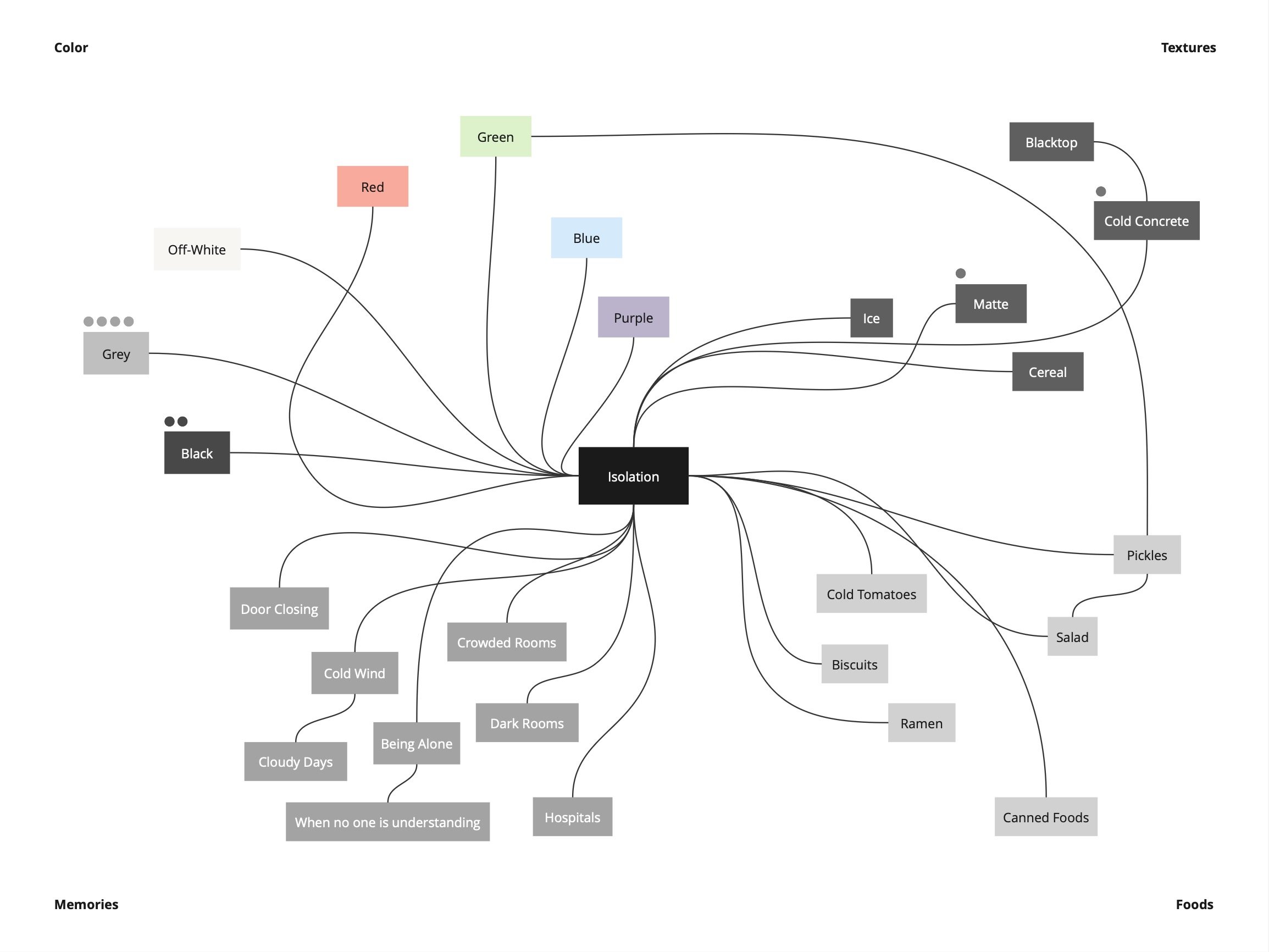
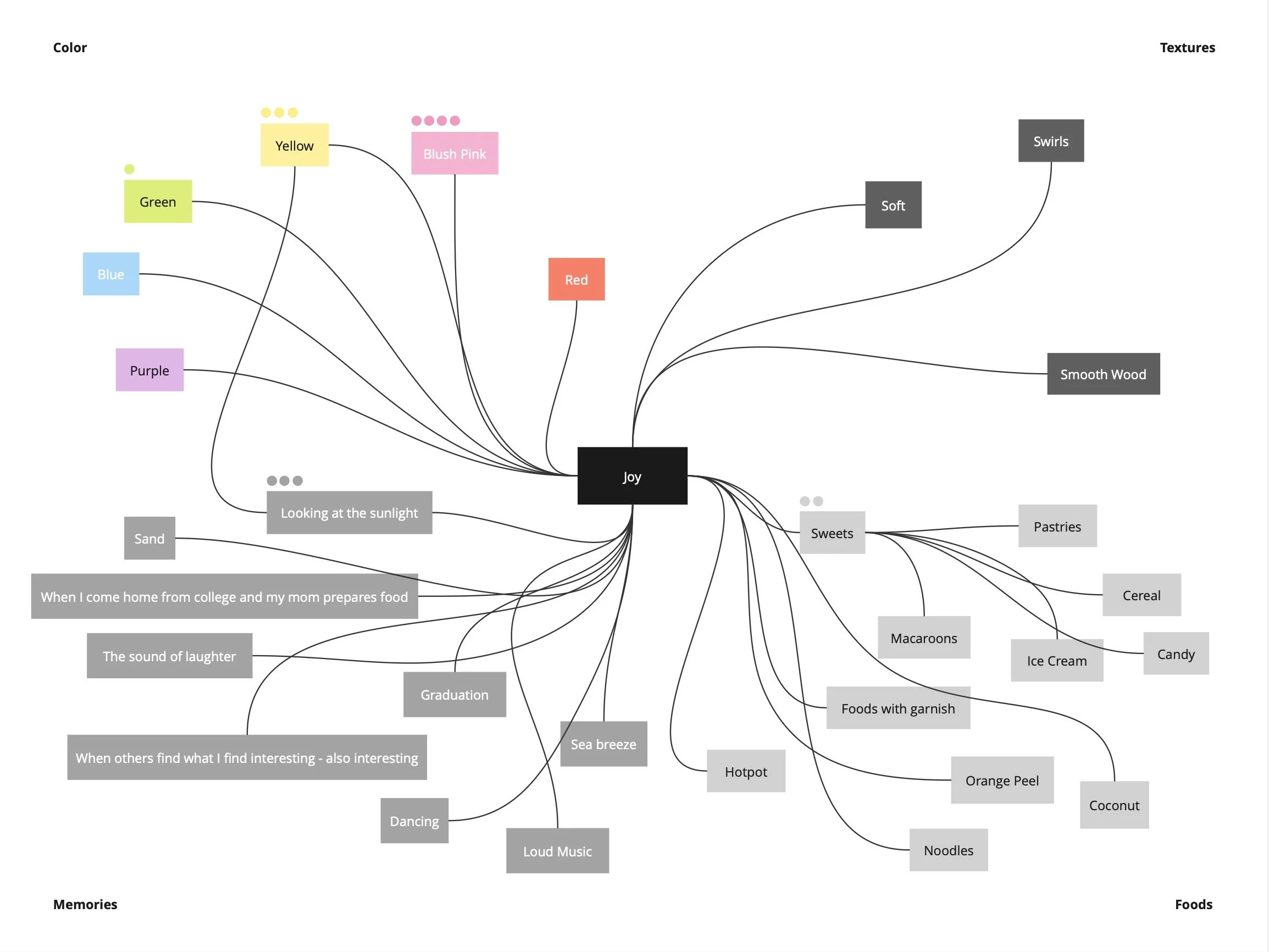
In the survey I asked participants which colors, textures, memories, and foods they associated with the emotions of comfort, fear, frustration, and isolation. Data collected from the survey was then compiled and organized using a MIRO board where I drew connections between similar ideas and tallied the most common responses.
This research process informed many of the design choices, including the color and form of my initial sketches and ideas.
An expert interview
I was able to interview Stephanie Machado-Jenkins, a professional art/experience therapist. Consulting an art therapist was extremely helpful in my design process, as I gained more insight into her own practice and the world of art therapy.
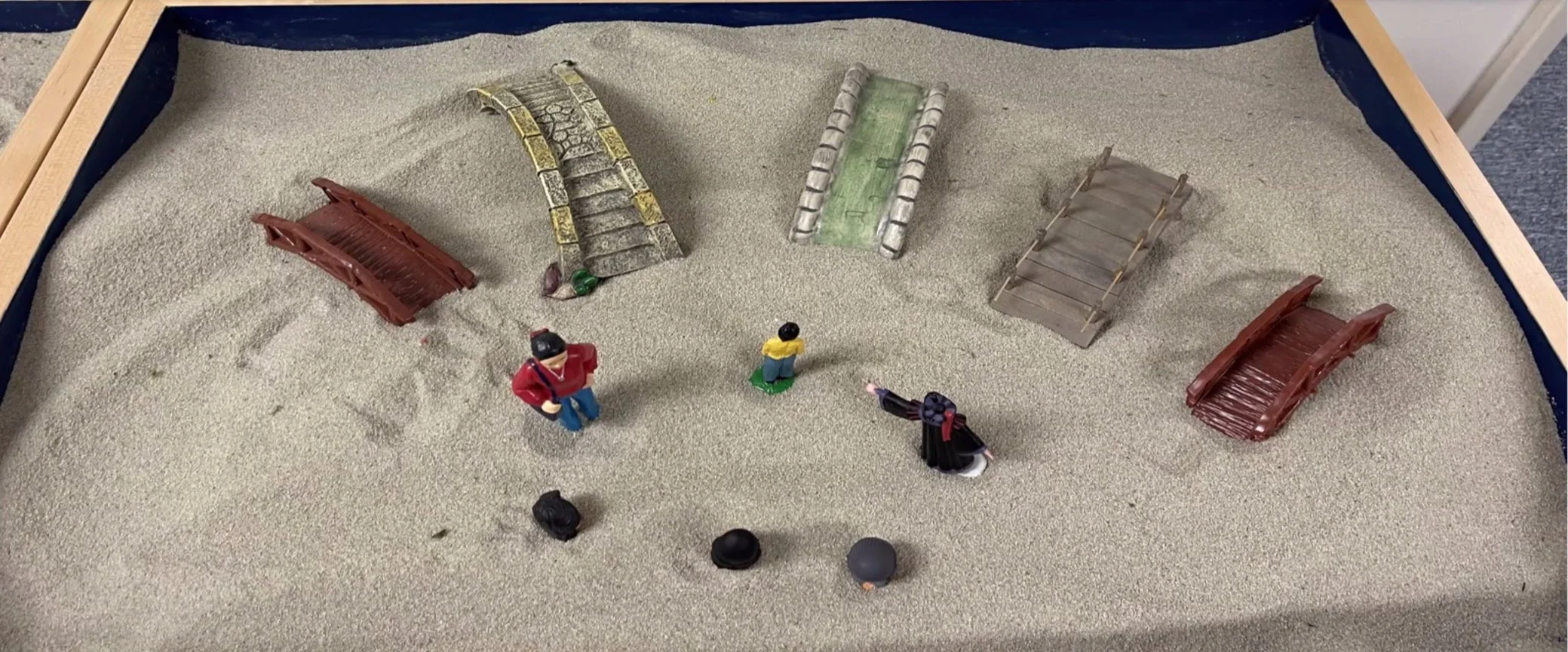
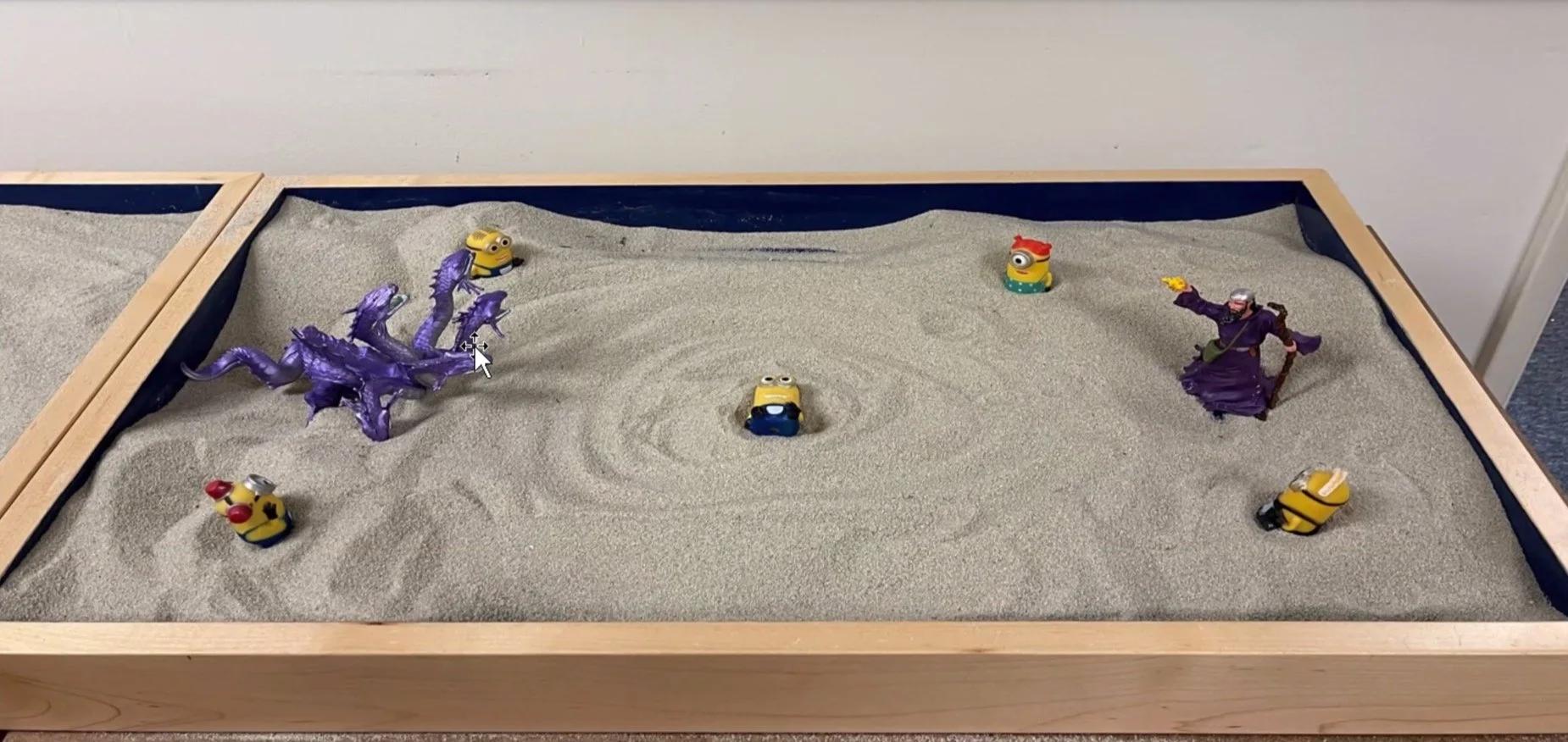
Below are examples of a sand play therapy tray from one of Mrs. Machado-Jenkins clients. She has an extensive collection of symbols and 2 sand trays (one dry/one wet) where clients are invited to “play” and organzine their thoughts and feelings.
Key User Research Takeaways
✦ Symbols make people feel safe when expressing their emotions
✦ Art therapists observe the process of art making not the product
✦ Art clients create are often predictive of future circumstances
✦ Art clients create is always documented and reflected on later
✦ There are no prompts in art therapy, the client has creative freedom
❋ Fabrication
Ideation Sketches
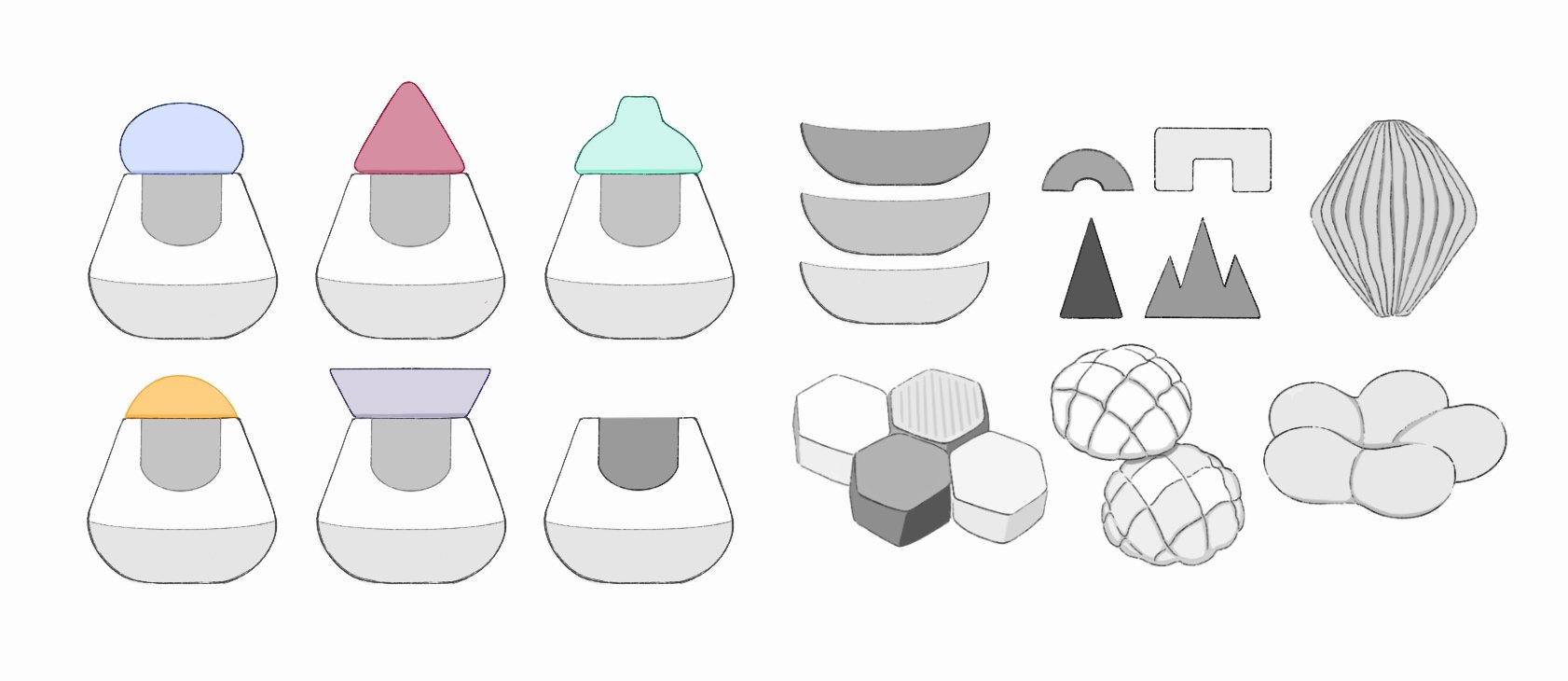
My sketched initial concept to show the various bases, color-scheme, and attachments of Sculpie. I wanted to convey through these sketches a sense of play.
Prototyping
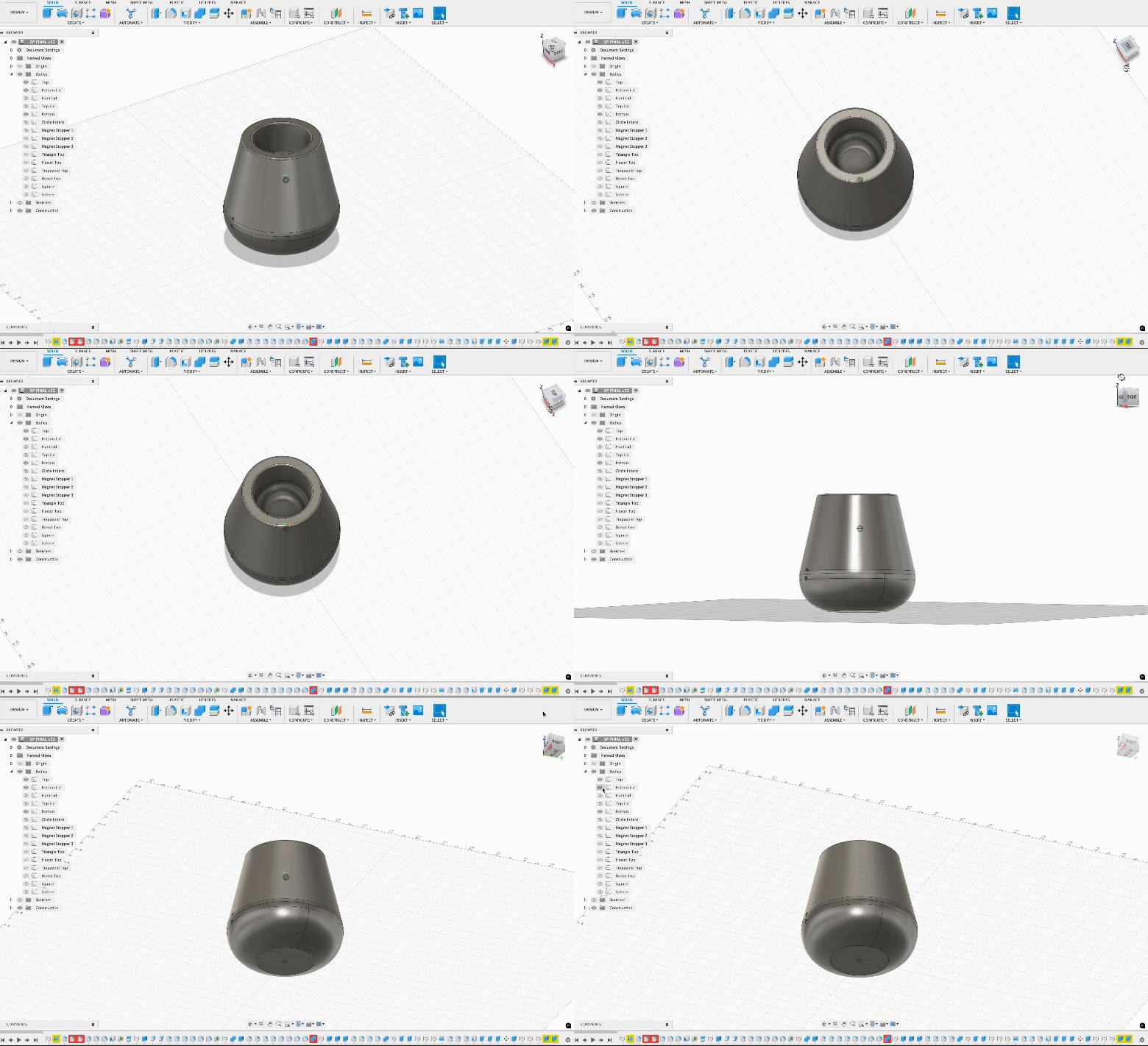
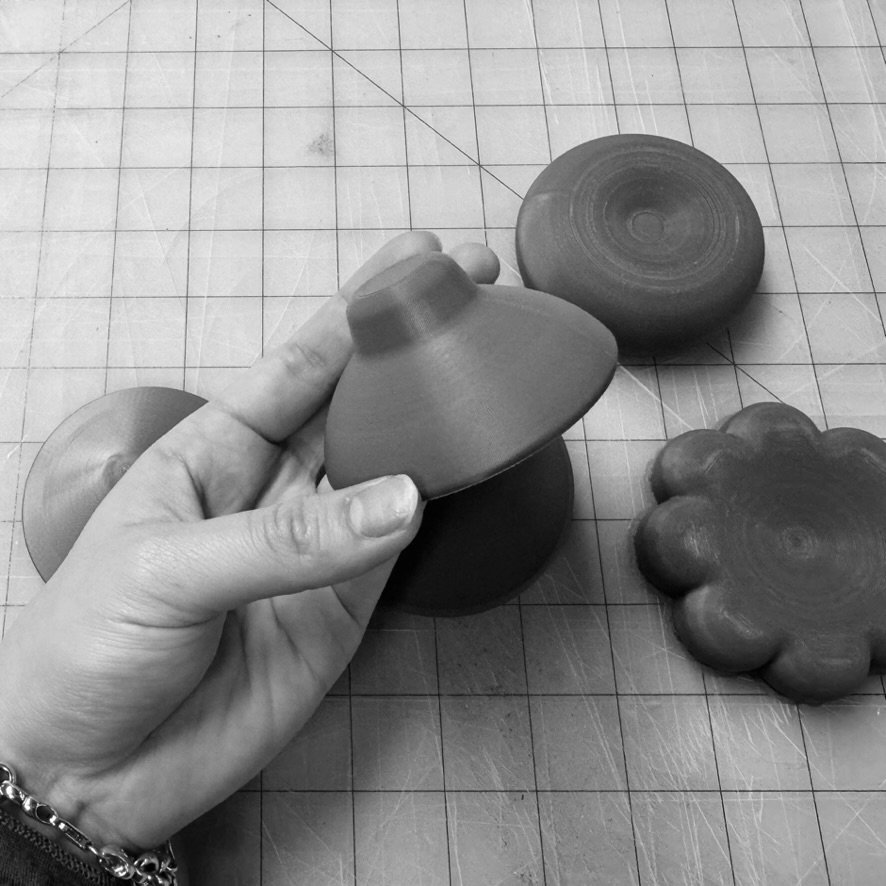
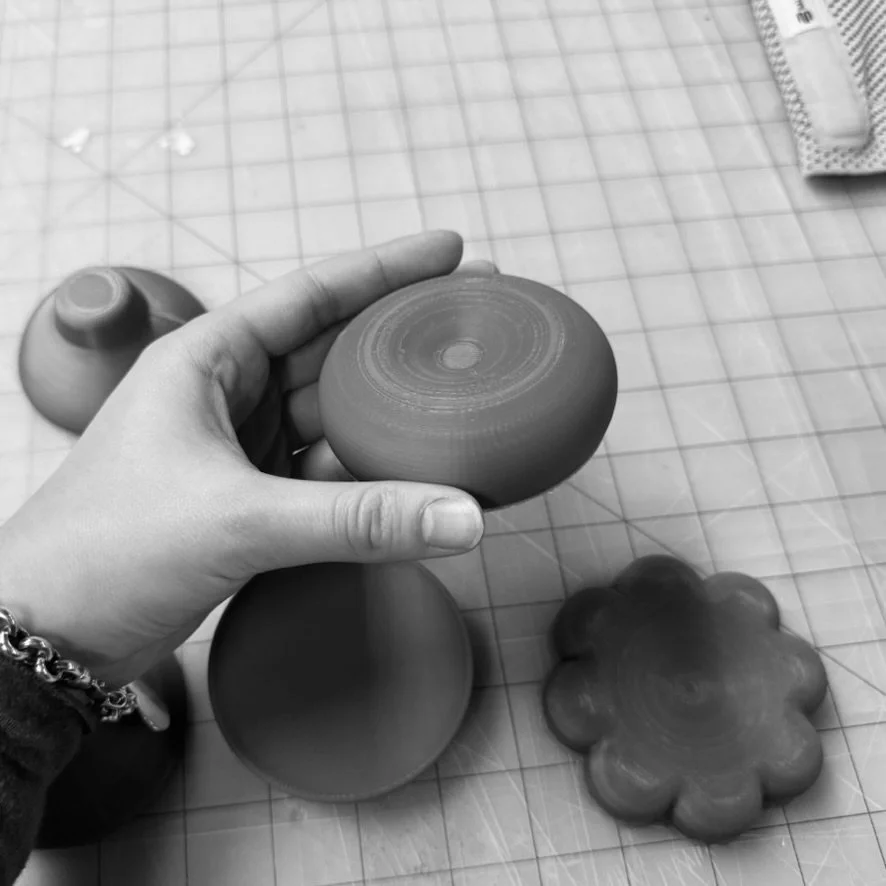
I began rendering the forms from my sketches in Fusion 360. The low-fi models I printed were extremely helpful as it allowed me to get a sense of the size, weight, and feel of the objects.
Applying Color + Finish
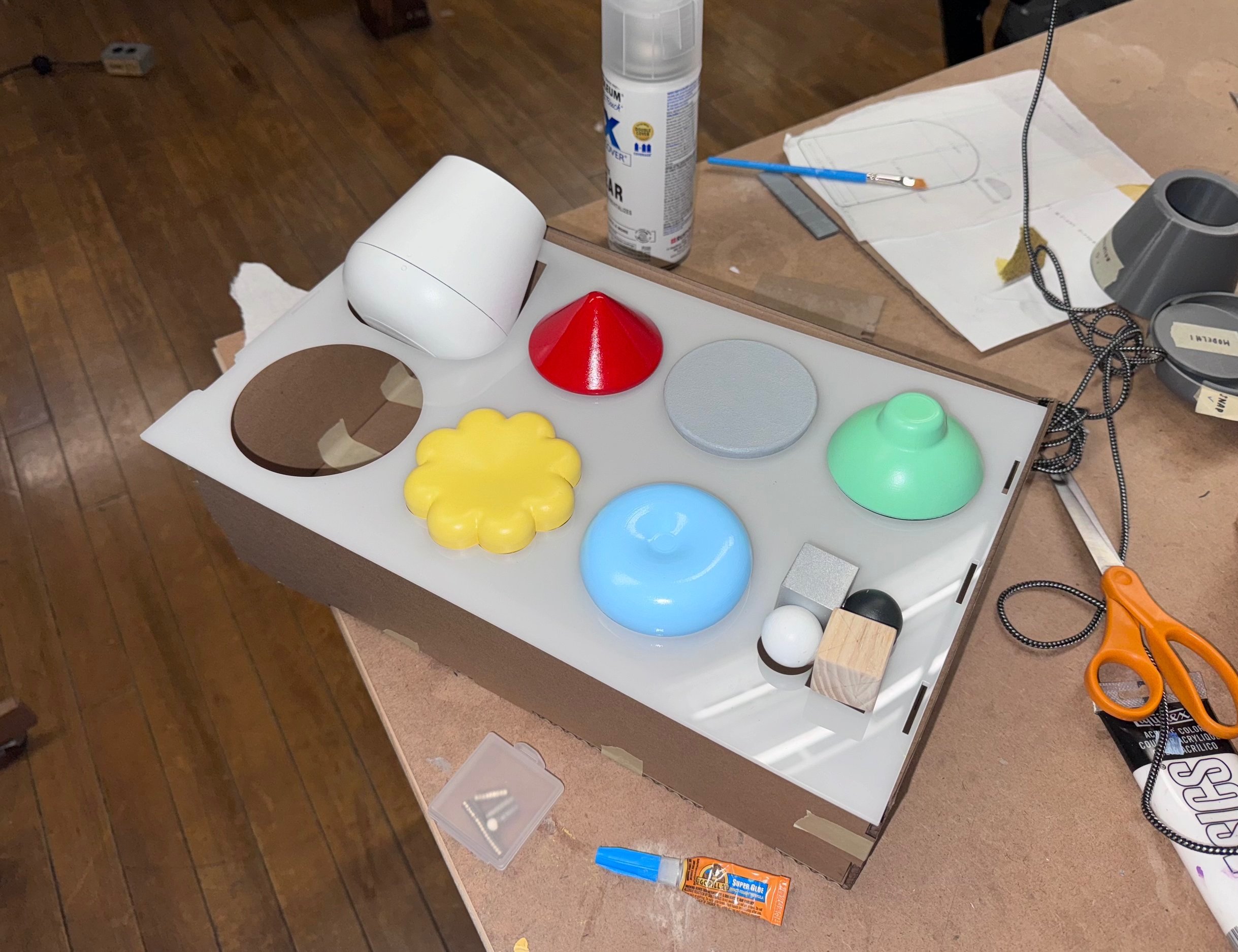
Each shape was 3-D printed, coated with acrylic paint, and finished with a spray paint gloss or a gel-medium finish. Variation in weight were created using steel car weights.
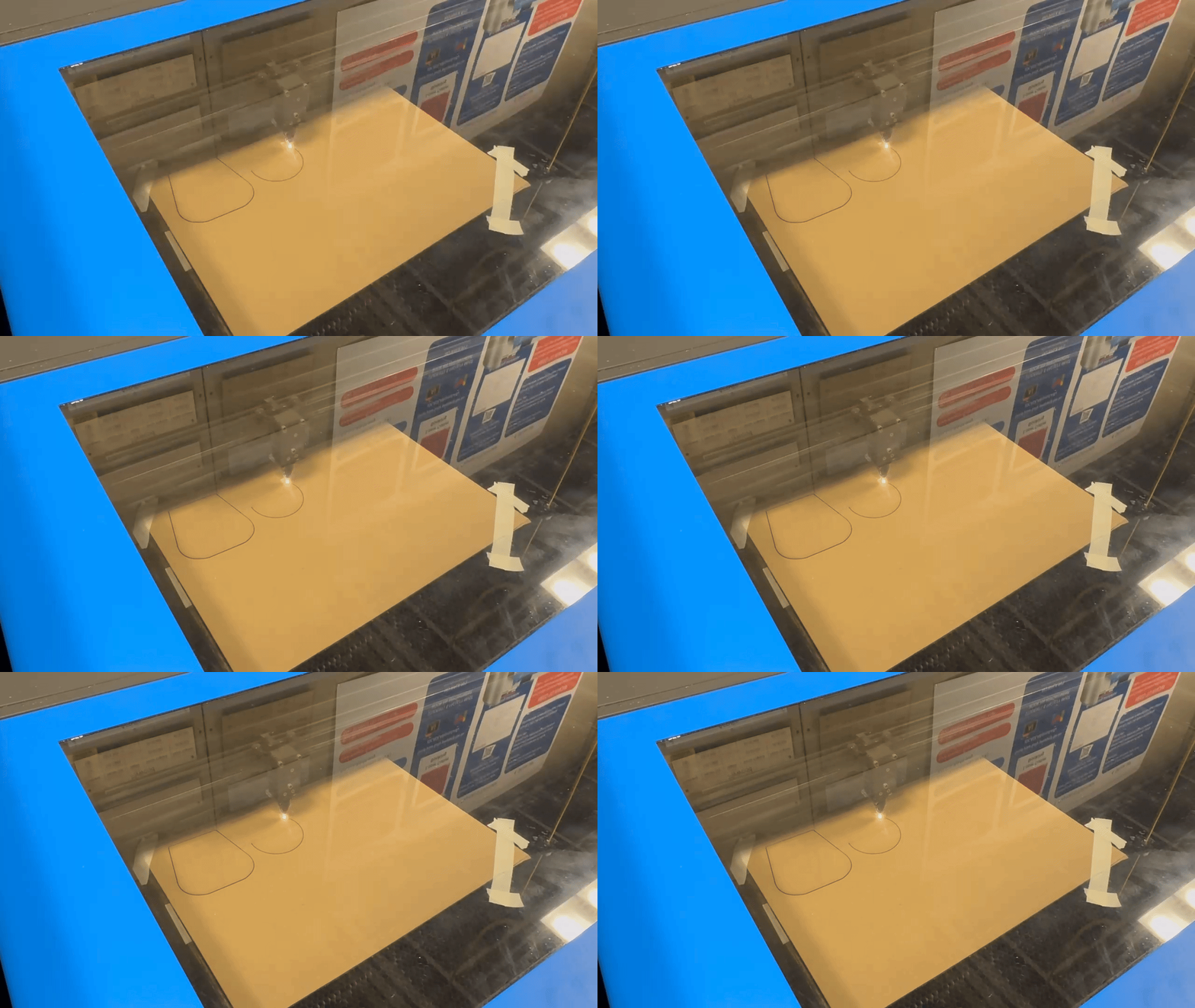
Creating the Tray
I first made a lo-fi model of the tray using cardboard first to make sure all the measurements were correct. The the final tray holding the items is made from acrylic to simplify sanitization between therapy sessions.
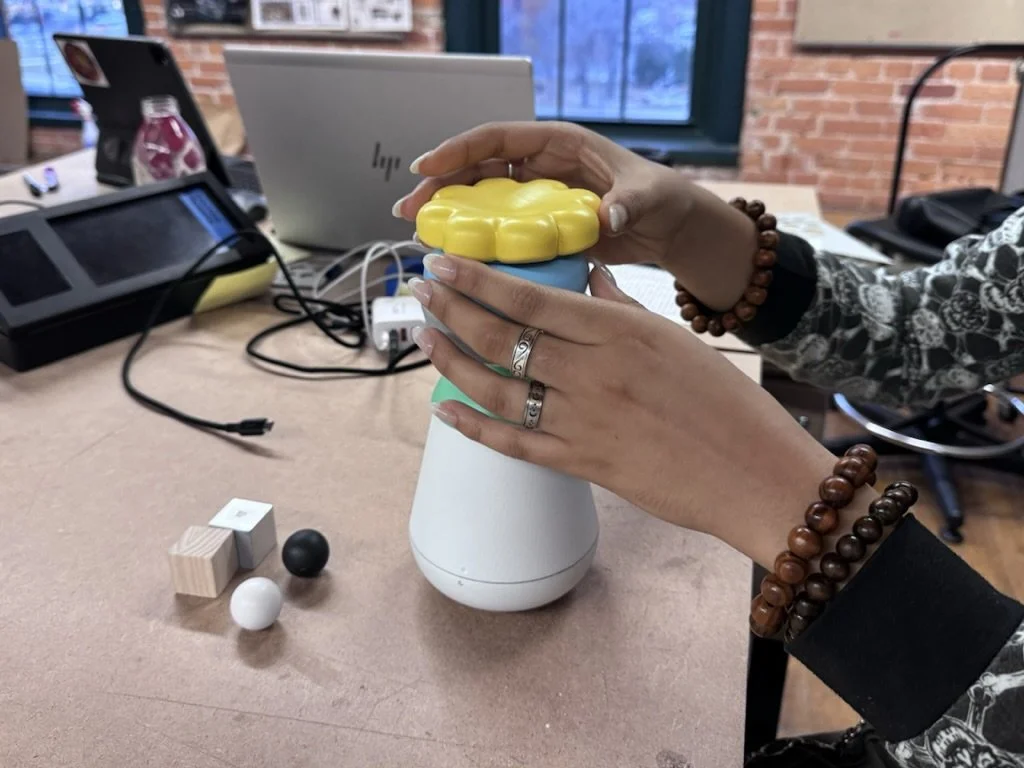
User Testing
Throughout this entire process user testing was a vital component. I wanted to gain feedback right from the consumers, asking people how each component felt, and if there were any suggestions they had for me. This was a huge step in making vital changes throughout my design process.
Crit Comments
“HMW statement is so specific and really helps paint a clear picture of your project goals. Interesting approach to data visualization, it works well for you.”
- Max Pratt (DP 1 Prof)
“I really appreciate accessibility being a core design principal for this project, but not something that necessarily constrains your product to a specific demographic.”
- Austin Kills (Mobility Tester)
Really interesting approach to data visualization, it works. Also, really interesting expert research, it gives good substance to the concepts you are proposing.
- Max Pratt (DP 1 Prof)