
Sculpie a new approach to art therapy
Fall 2024 • Design Principles
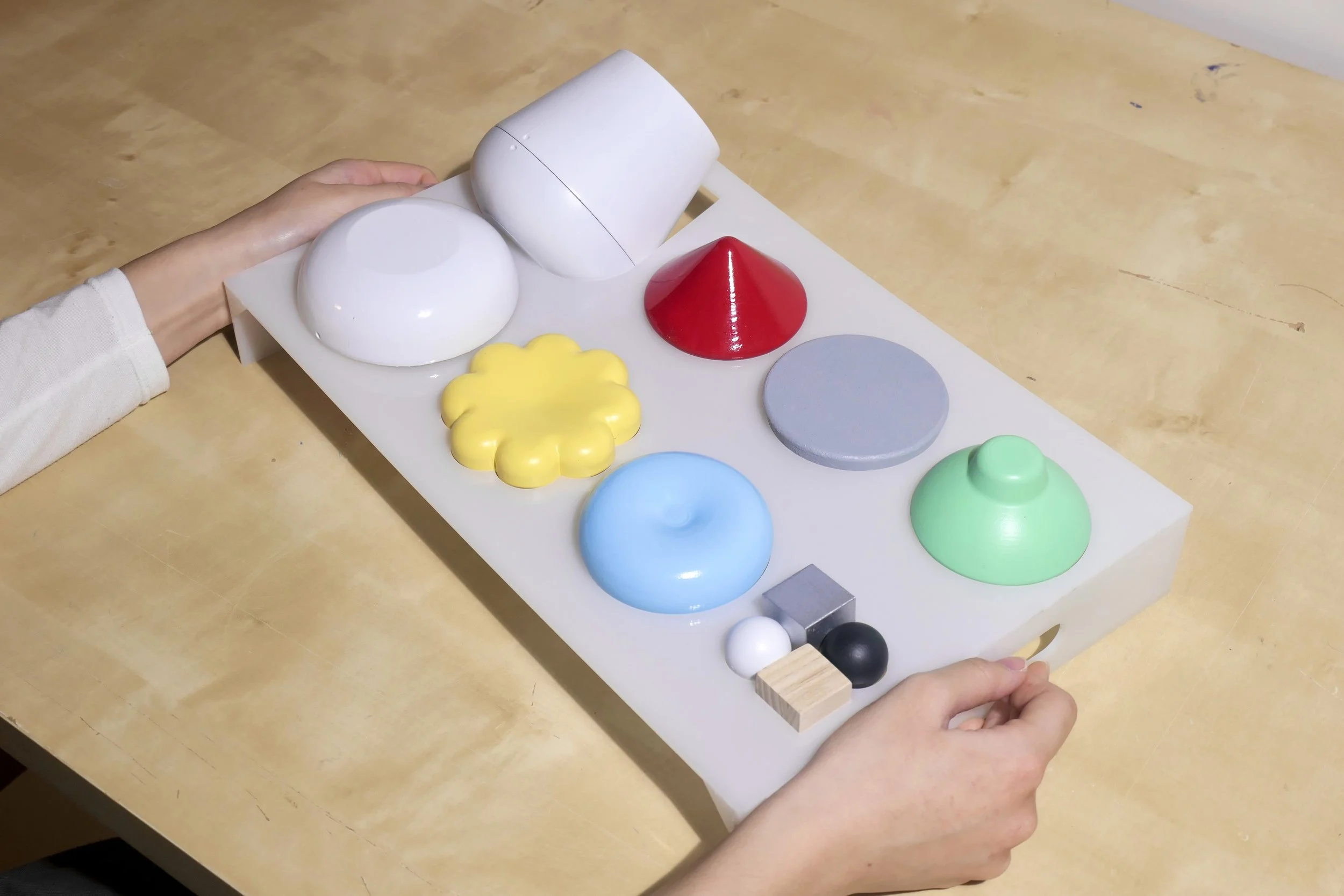
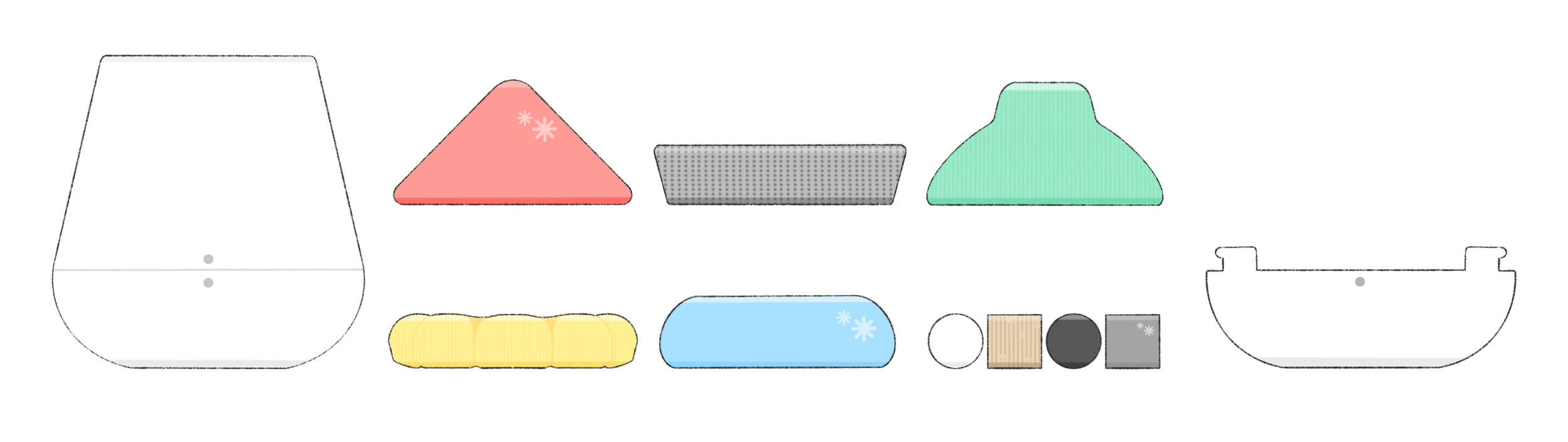
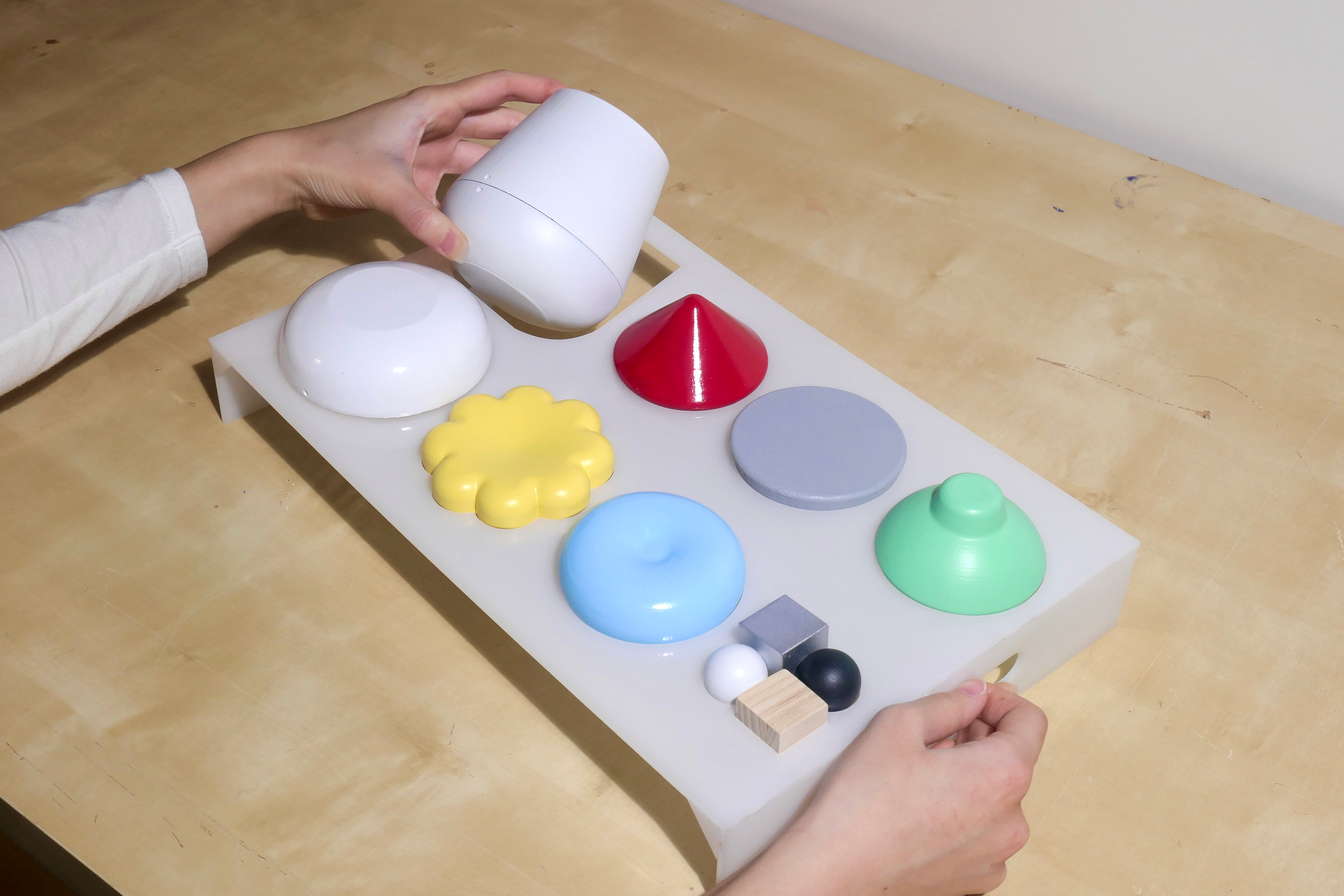
Sculpie is an emotional expression toolkit intended for use within a clinical art therapy setting. Sculpie includes various symbols, each with a unique color, weight, and texture to help art therapy clients sculpt complex emotions. All components are held together by embedded magnets within each element, providing a satisfying and grounding tactile experience.
What is Sculpie?
Product Features
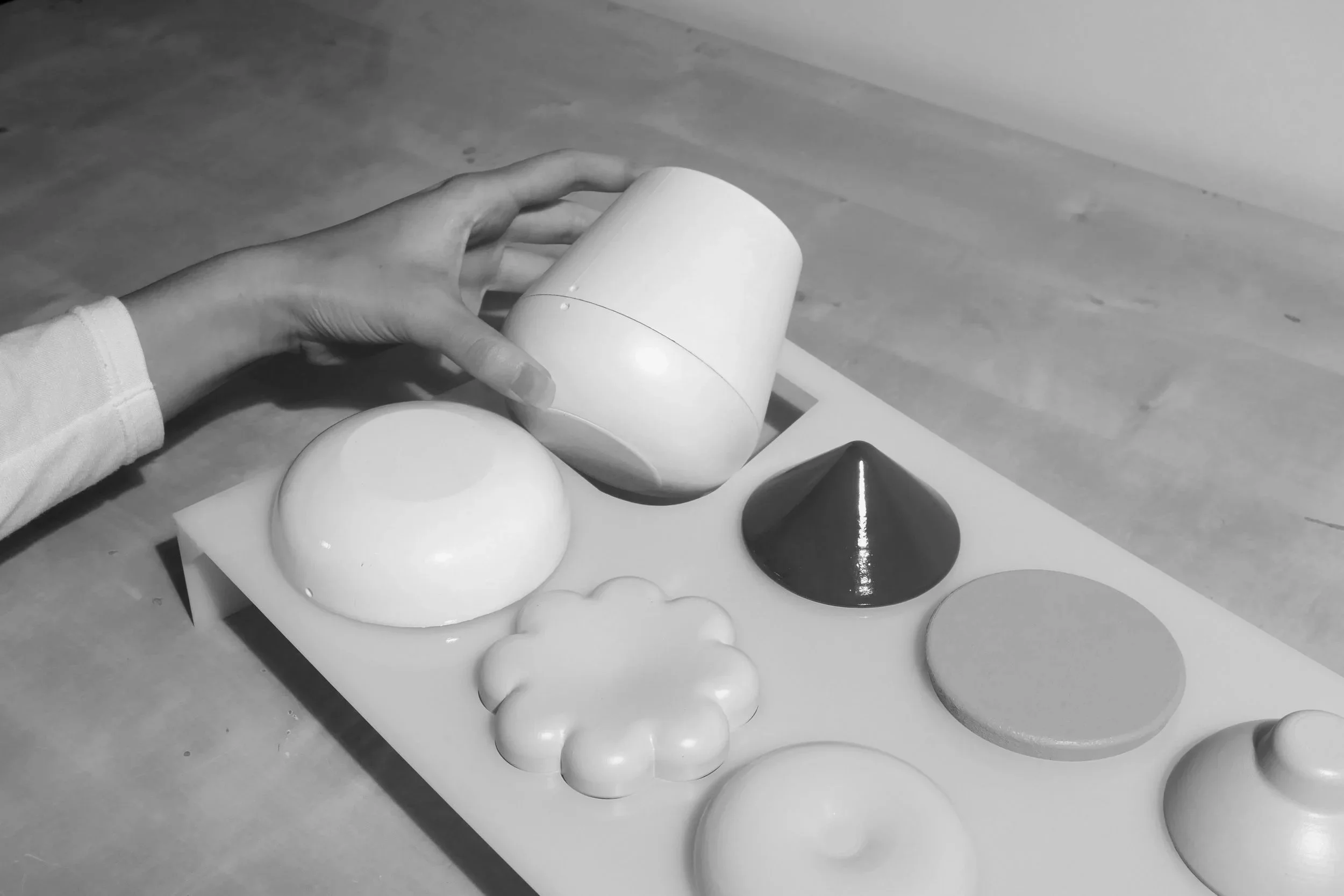
Unique Weight, Texture, & Color
Variations provide participants with diverse options to sculpt complex emotions.
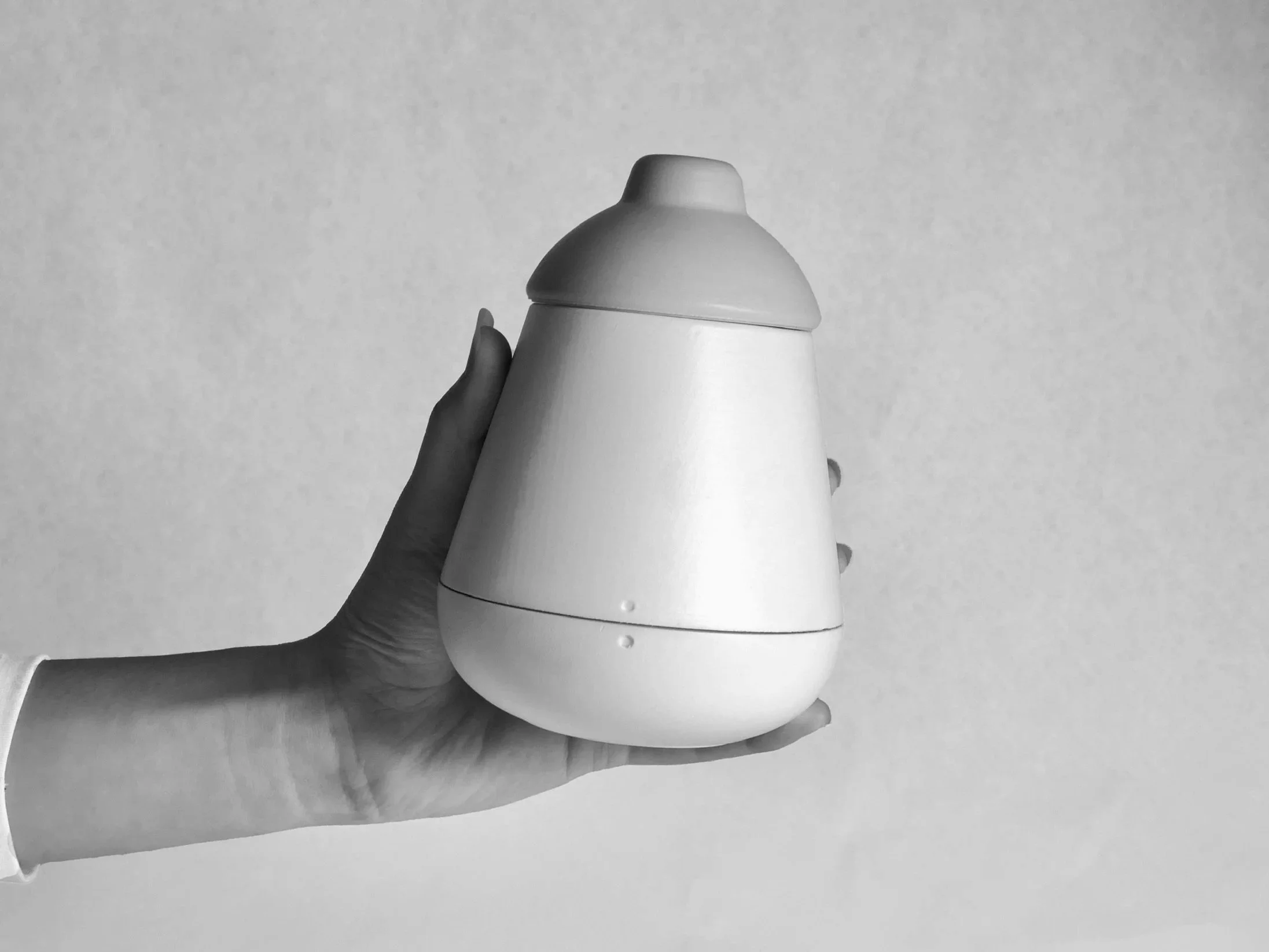
Magnetic Attachments
Magnets are embedded for easy attachment for individuals with limited motor abilities.
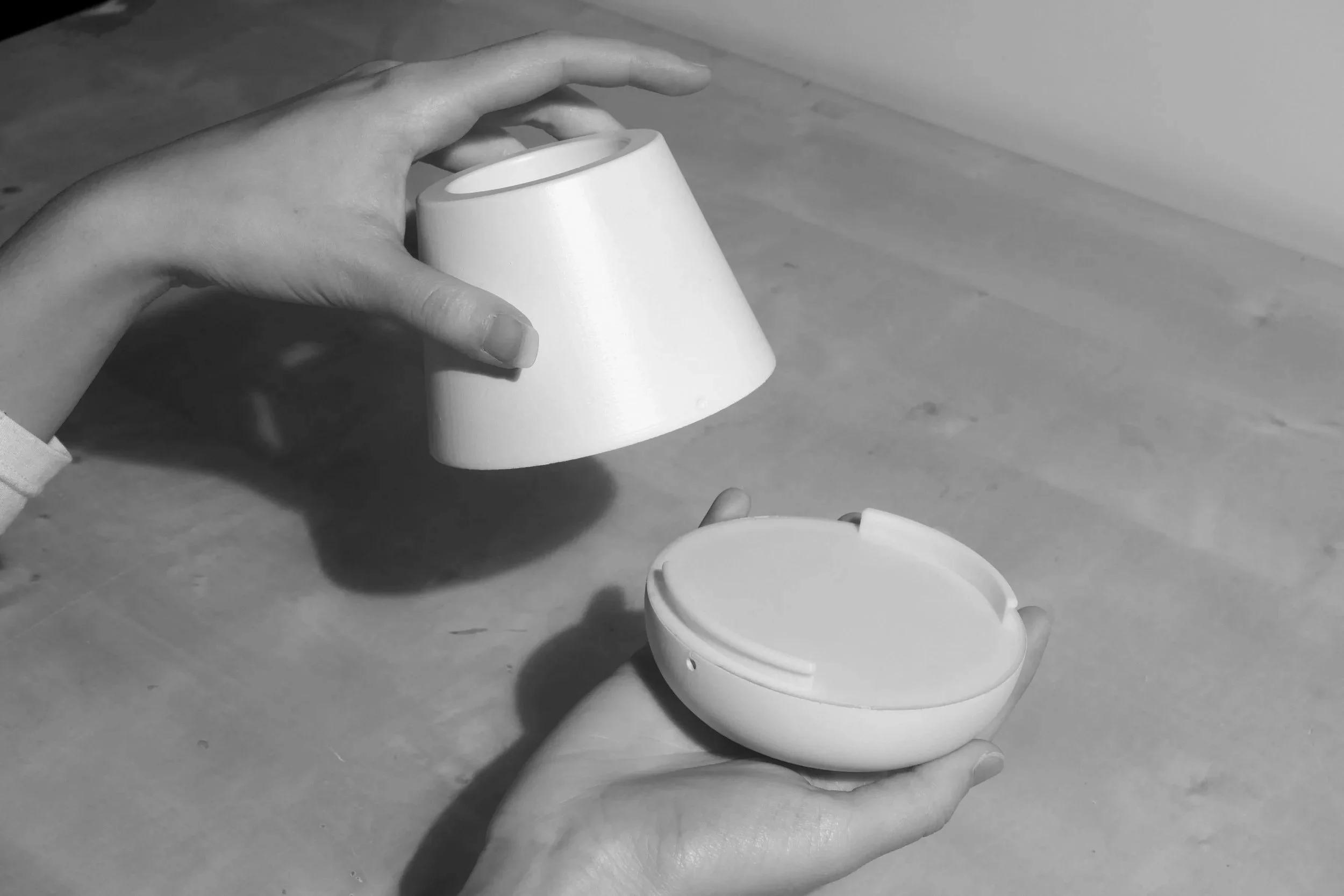
Removable Base
Magnets are embedded for easy attachment for individuals with limited motor abilities.
Why Art Therapy?
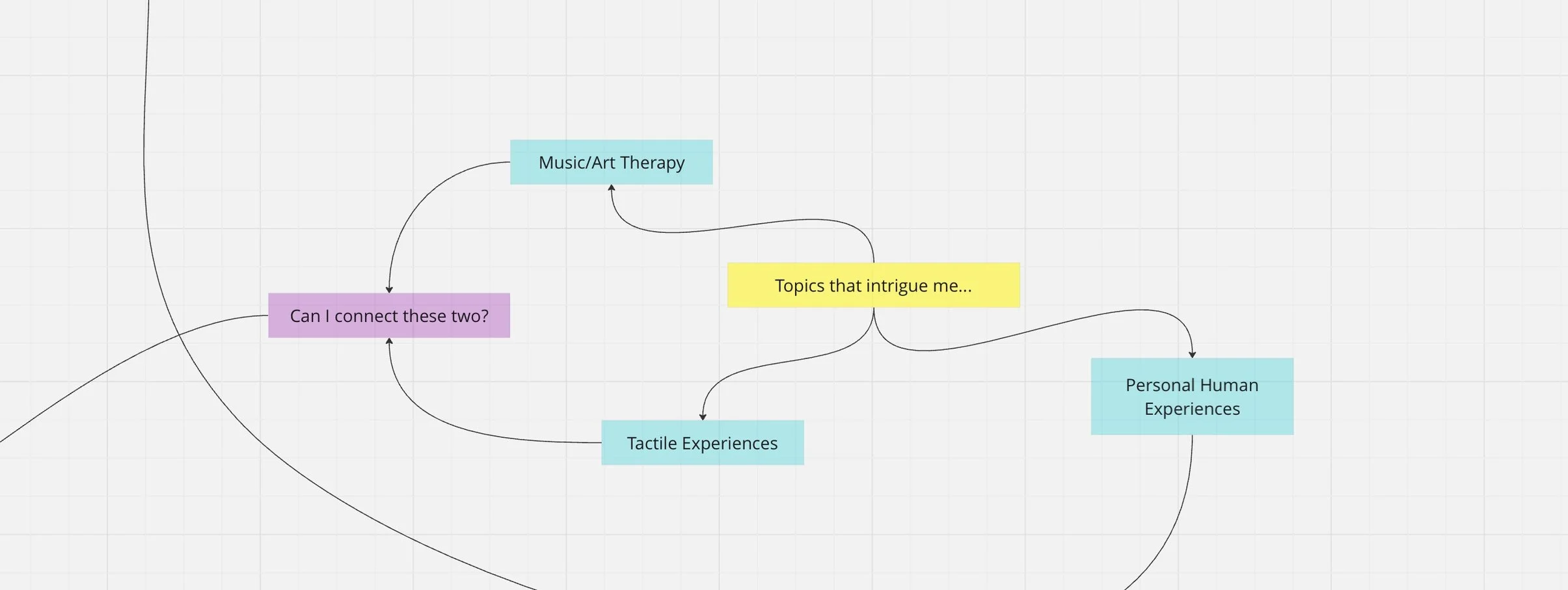
At the start of this project, I “brain-dumped” my thoughts onto a MIRO board. I wrote down everything I was interested in creating, topics that intrigued me, problems I wished to solve, and more.
Art therapy sat at the intersection of everything my brainstorming pointed toward. It offered a space where I could create tactile products that support people on a deeply personal level. I was drawn to how, at its core, art therapy is an indirect, calming, safe, and deeply personal form of communication.
How might we…
make art therapy more approachable for adults and accessible for motor compromised individuals?
Research
User Research #1 Survey of 30+ adults on their sentiments towards art therapy
What are some drawbacks of art therapy?



Too “Childish”
Many adults feel like drawing/painting are juvenile, and do not see art therapy as a legitimate form of therapy.
“As an adult I fear that art therapy may be too ‘childish’ and ‘juvenile’ for my age group.”
Messy + Time Consuming
Art therapy often requires supplies that can make a mess and requires a tot of time for set up.
“Sand-therapy can be really messy especially when working with wet-sand. The whole process is long and drawn out.”
Overwhelming Skill Barrier
Many adults feel overwhelmed and view artistic tasks as unapproachable.
“I felt hesitant to start art therapy because I didn’t think I had the artistic ability to do it… all the art supplies can be overwhelming.”
What do you find effective about art therapy?
Nonverbal Communication
Art therapy integrates forms of nonverbal communication that make clients feel safe when emoting.
“As an adult I fear that art therapy may be too ‘childish’ and ‘juvenile’ for my age group.”

Messy + Time Consuming
Art therapy often requires supplies that can make a mess and requires a tot of time for set up and clean up.
“Art brings me back to a time that felt less stressful and full of wonder, curiosity, and ease.”
Personal + Safe
Creating art is a very personal act. You are able to prescribe the meaning to the work you create.
“The art I make is very personal. It’s like I create a code or language only I can fully understand.”


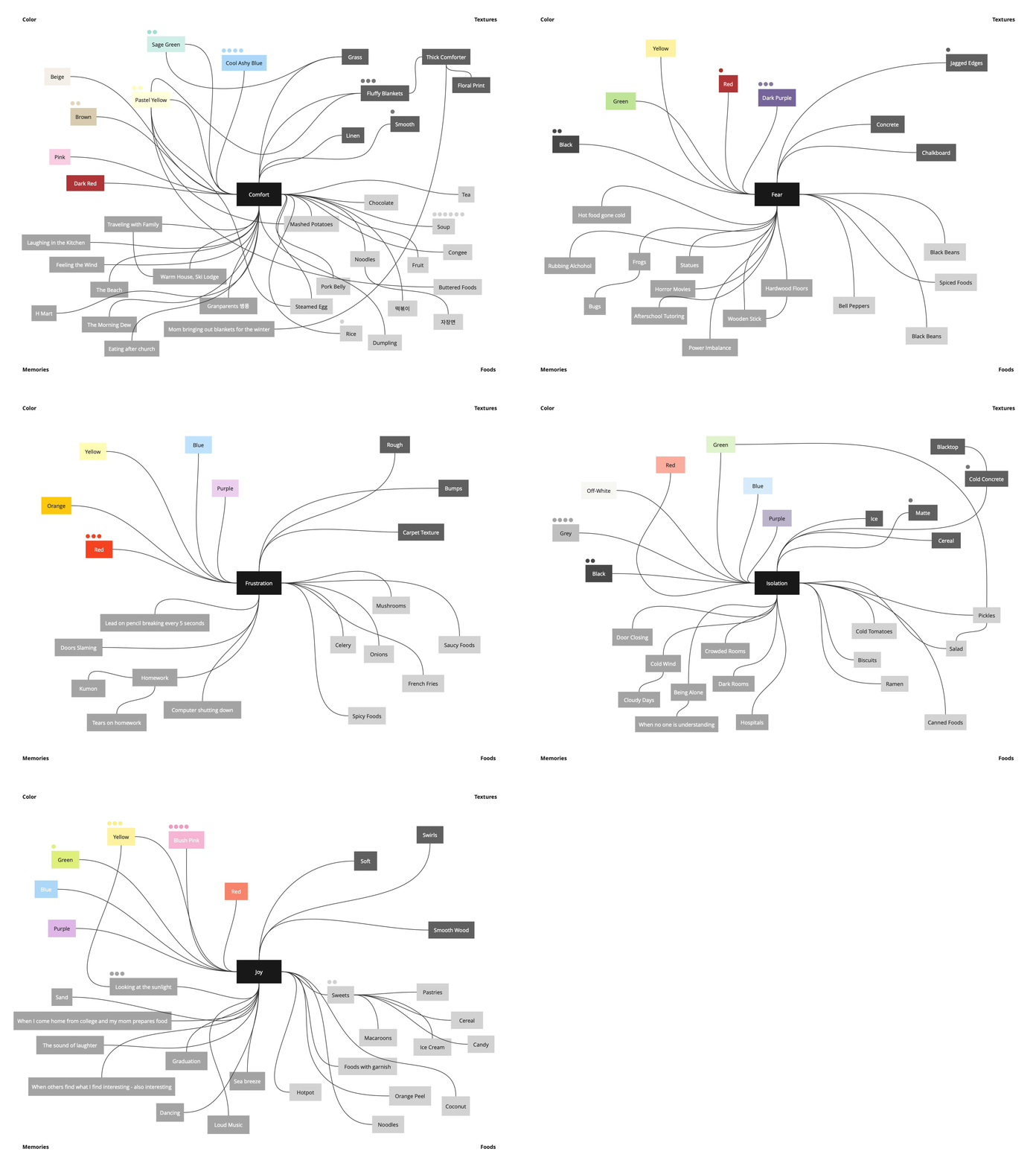
User Research #2 Survey of 40+ individuals material and color in relation to emotion
I was able to conduct a survey with 40 individuals with ages ranging from 10-65 years old.
In the survey I asked participants which colors, textures, memories, and foods they associated with the emotions of comfort, fear, frustration, and isolation. Data collected from the survey was then compiled and organized using a MIRO board where I drew connections between similar ideas and tallied the most common responses.
This research process informed many of the design choices, including the color and form of my initial sketches and ideas.
Expert Interview with Stephanie Jenkins a professional art and experience therapist
Consulting an art therapist was incredibly valuable to my design process, as it gave me deeper insight into Mrs. Jenkins’s practice and the broader field of art therapy.
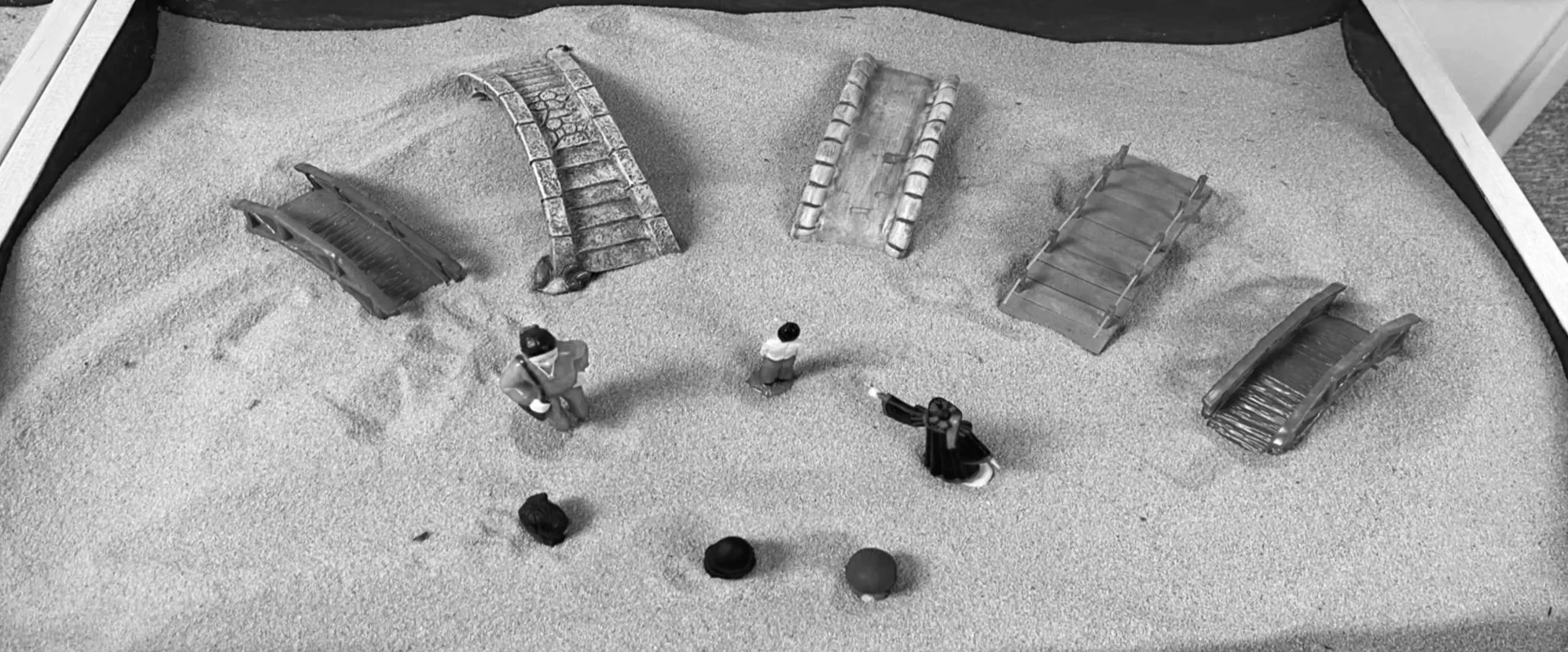
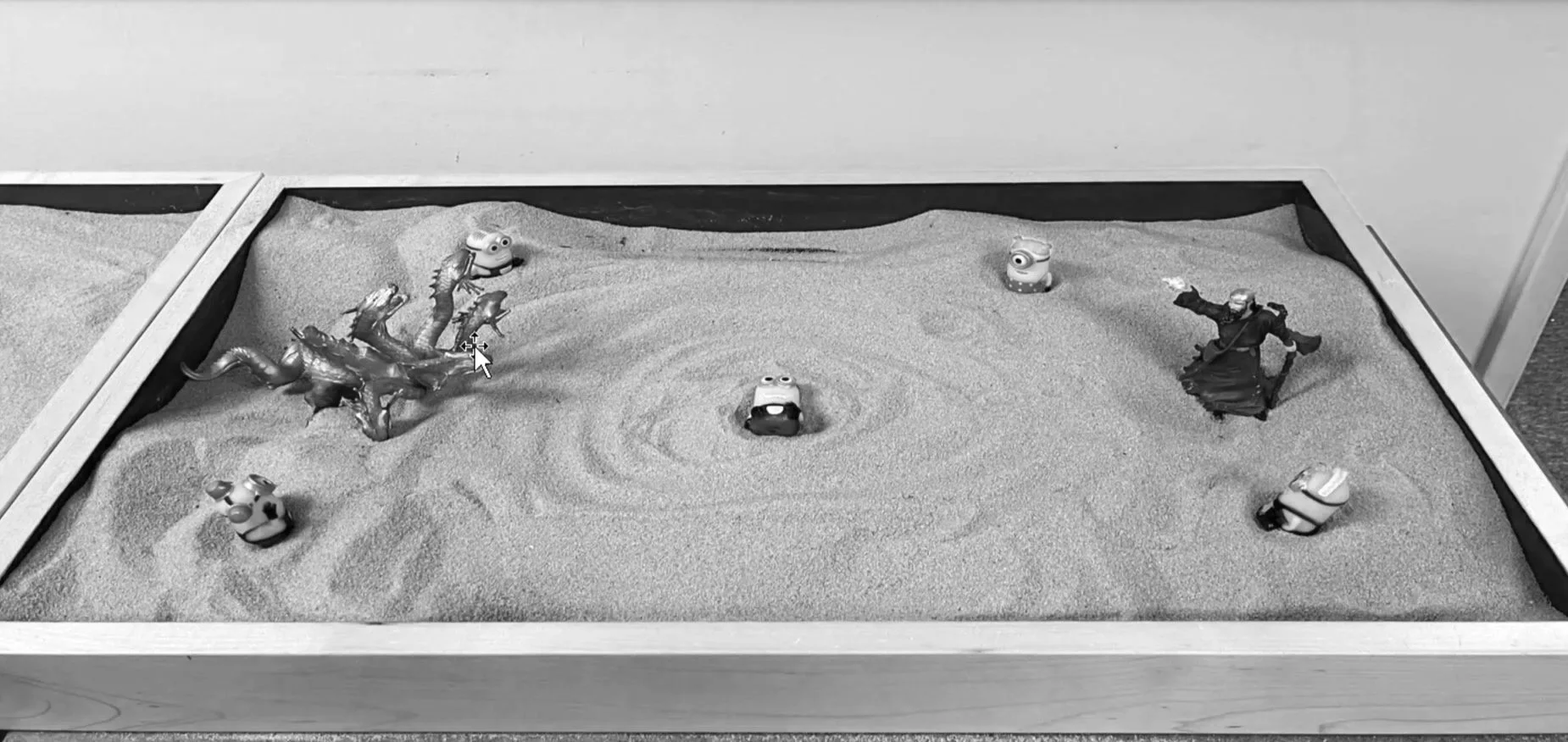
Below are examples from one of her clients’ sand-tray therapy sessions. Mrs. Jenkins maintains an extensive collection of symbolic objects and two sand trays—one dry and one wet—where clients are encouraged to “play” and organize their thoughts and emotions through tactile expression.
#1
Symbols help make people feel safe when expressing their emotions, and is a non-direct form of communication.
#4
Artwork clients create is always documented and reflected on later by the therapist.
#2
Art therapists overtimes observe the process of art making more than product.
#5
In art therapy there are no prompts and the client has total creative freedom and reign.
#3
Art therapy clients oftentimes create artwork that is predictive of future circumstances.
Research Takeaways
Prototyping
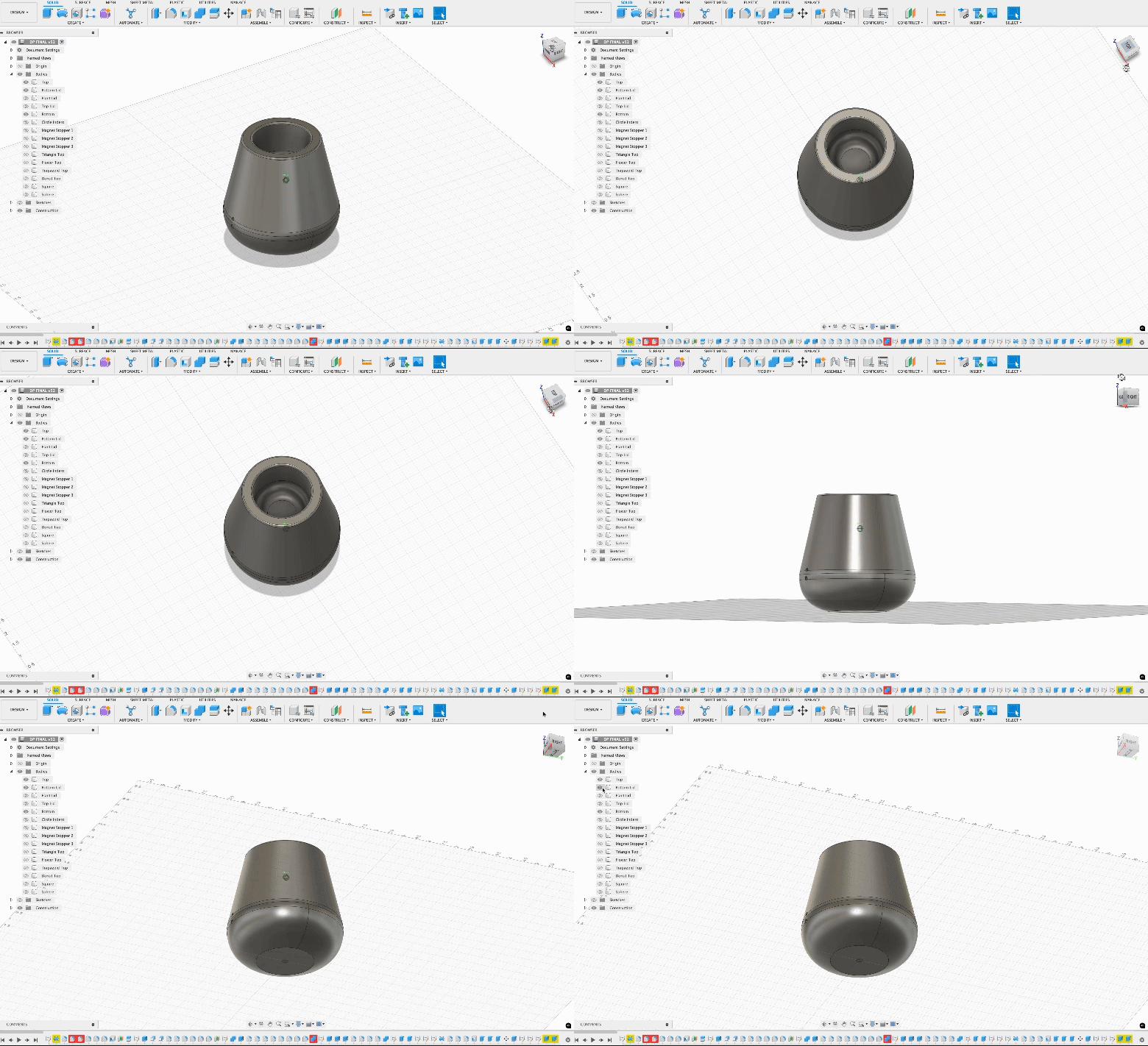
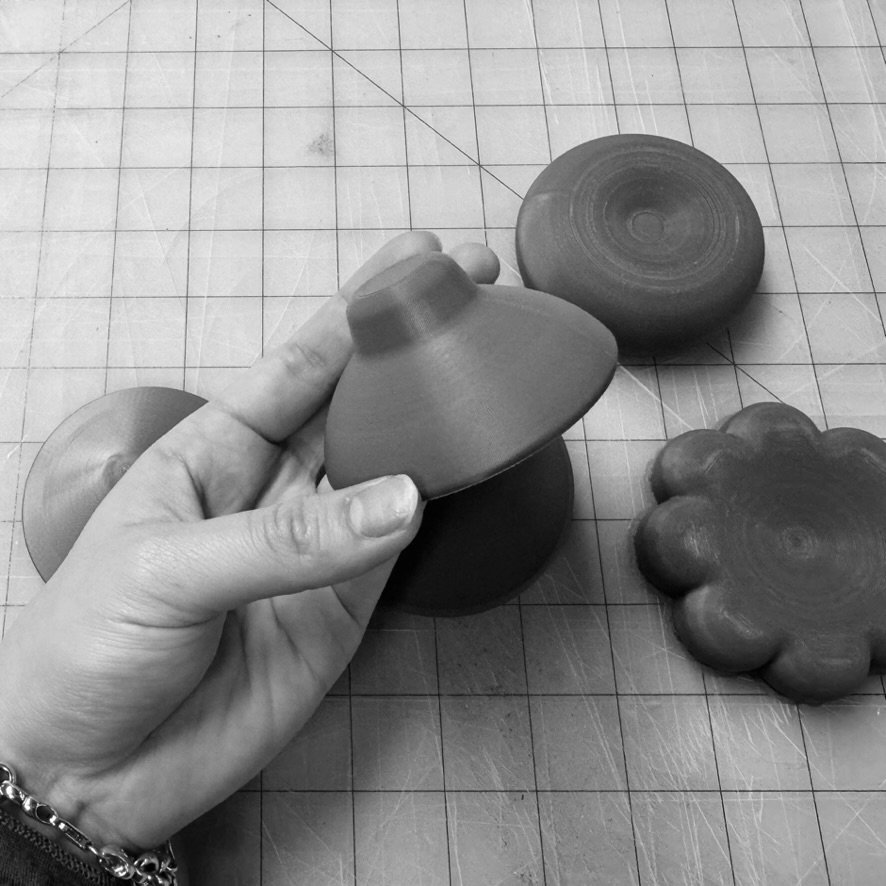
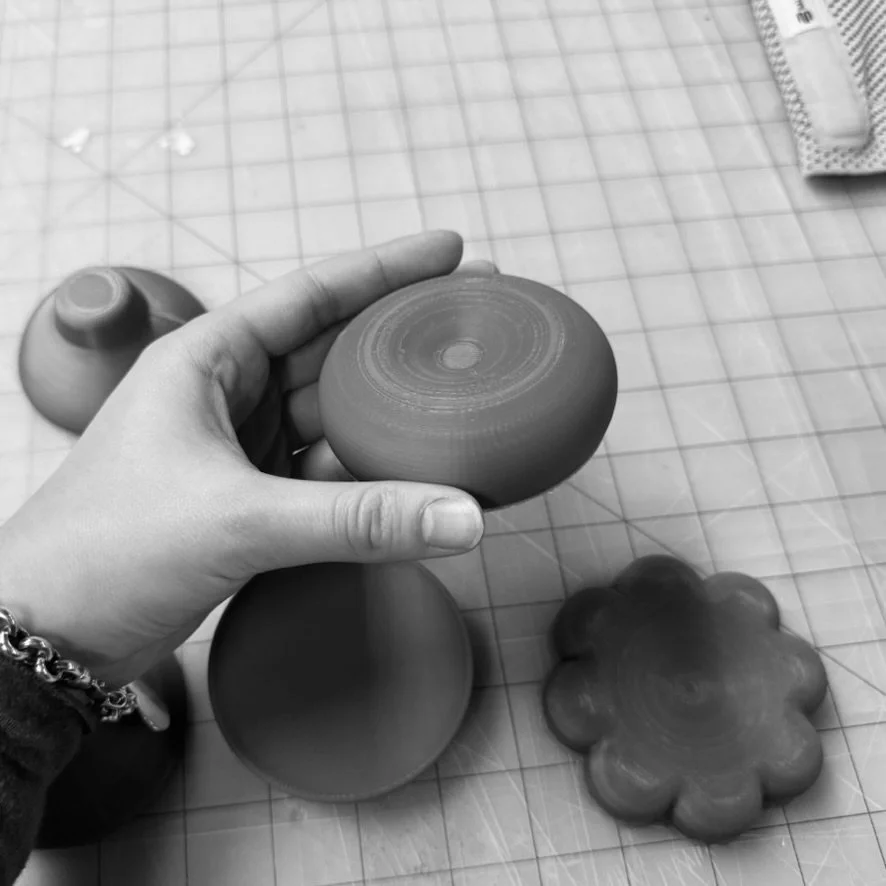
All mid-fidelity and high-fidelity prototyping and modeling was done using CAD modeling (Fusion 360) and 3D printed (FDM Extrusion). The mid-fidelity models I printed were extremely helpful as it allowed me to get a sense of the size, weight, and feel of the objects.
Fabrication
Color, Material, Finish (CMF)
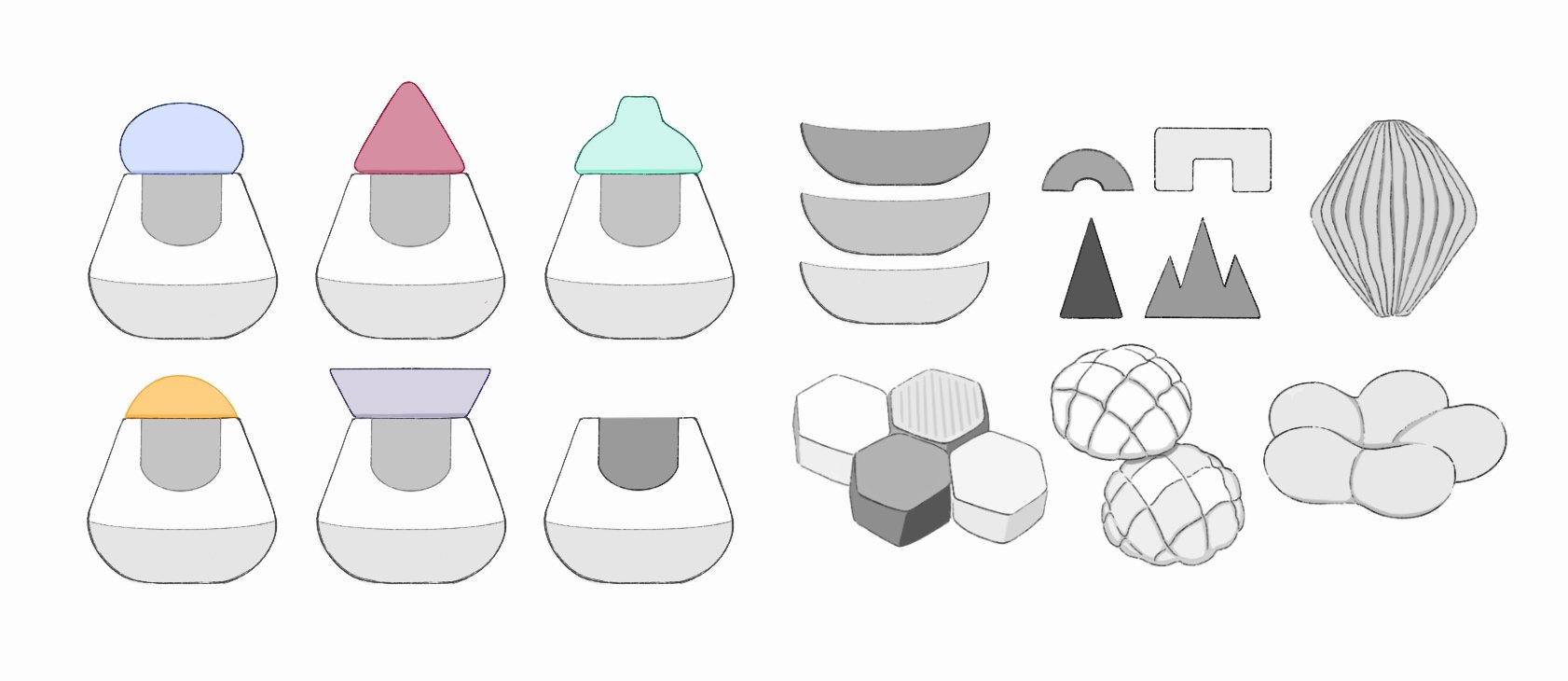
Each 3D-printed component was sanded, finished, and coated with a colored pigment. Insights from my initial user research, specifically on how different colors evoke certain emotion, strongly informed the final color and finish choices of each piece.
I first started the process with sketches and experimenting with different color schemes to get my initial ideas going.
“HMW statement is so specific and really helps paint a clear picture of your project goals. Interesting approach to data visualization, it works well for you.”
- Max Pratt (Mobility Designer)
“I really appreciate accessibility being a core design principal for this project, but not something that necessarily constrains your product to a specific demographic.”
- Austin Kills (Mobility Tester)
Reflection
Personal Reflection
Sculpie was a deeply rewarding process. Through this project, I realized my desire as a designer to create products and experiences that resonate with people on an emotional level. It opened the door to my interest in art therapy and helped me understand the powerful impact that making and play can have on one’s mental health. Grounded in research, my approach allowed me to develop a thoughtful, well-informed product for the art therapy space.